Search This Blog

Dr. Vikram Chauhan - MD (Ayurveda)

Showing posts with label ingredients. Show all posts

Thursday, November 13, 2025

Vat Gajankush Ras - Ingredients, Indications, Preparation, Medicinal Properties, Dosage & More

Reference – Bhaishajya-Ratnavali Vatvyadhi rogadhikar Chapter 26 Verse-114-118

ABSTRACT

Neurological and musculoskeletal disorders caused by aggravated Vata dosha (Vata Vyadhi) can lead to paralysis, stiffness, tremors, and chronic pain, often resistant to conventional therapies. Ayurveda, with its holistic principles, provides safe and effective management for such complex conditions. Vatagajankush Ras, a classical herbo-mineral formulation, is renowned for its potent Vatahara (Vata-pacifying) and Rasayana (rejuvenating) properties. It strengthens the nervous system, restores motor functions, relieves pain, and improves neuromuscular coordination. This formulation is beneficial even in chronic and complicated neurological disorders like Pakshaghata (paralysis), Gridhrasi (sciatica), and Manyastambha (cervical rigidity), as it offers rapid and sustained relief, serving as a powerful Ayurvedic alternative for long-term nerve and joint health. Let’s explore it in detail!

INTRODUCTION

Vat Gajankush Ras is a classical Ayurvedic herbo-mineral formulation primarily indicated for the management of Vata-related disorders. The name can be broken down as follows: "Vat" denotes the Vata dosha, whose imbalance leads to neurological, musculoskeletal, and joint disorders; "Gajankush" refers to the use of potent mineral and herbal ingredients that are strong, stabilizing, and rejuvenating; and "Ras" signifies a herbo-mineral preparation in Rasashastra. This formulation is traditionally recognized for its Vata-pacifying and restorative properties. It supports musculoskeletal strength, neurological balance, and overall vitality, integrating valuable bhasmas and herbal extracts to enhance both therapeutic efficacy and holistic well-being.

CLASSICAL INDICATION

Vat vyadhi (Neurological disorders)

INGREDIENTS

Each ingredient is used in equal proportion (1 part each):

  1. Rasasindura – Red Sulphide of Mercury
  2. Lauha Bhasma – Calcined Iron Ash
  3. Swarna Makshika Bhasma – Ash of Chalcopyrite (Copper-Iron Pyrite)
  4. Shuddha Gandhaka – Purified Sulphur
  5. Shuddha Haratala – Purified Orpiment (Arsenic Trisulphide)
  6. Haritaki Churna – Powder of Terminalia chebula
  7. Kakdshingi Churna – Powder of Pistacia integerrima Galls
  8. Shuddha Tankana – Purified Borax
  9. Saindhava Lavana – Rock Salt
  10. Pippali Churna – Powder of Piper longum
  11. Maricha Churna – Powder of Piper nigrum
  12. Arani Churna – Powder of Premna integrifolia (Arani root bark)
  13. Shuddha Tankana (again mentioned) – Purified Borax
  14. Muṇḍisvarasa (juice of Sphaeranthus indicus)
  15. Nirguṇḍi Patrasvarasa (juice of Vitex negundo leaves)
Vat Gajankush Ras

DESCRIPTION OF THE INGREDIENTS

1. Rasasindura (Red Sulphide of Mercury)

It has Rasayana (rejuvenative) and Yogavahi (catalytic) properties with Ushna Veerya (hot potency). It pacifies Vata dosha, supports Muscles (Mamsa) and Nervous tissue (Majja), and enhances tissue nourishment and overall vitality. It penetrates deep tissues to reduce stiffness, neural irritation, and joint pain. Rasasindura works synergistically with other bhasmas and herbs in Vat Gajankush Ras to alleviate neurological, musculoskeletal, and joint disorders by restoring strength, flexibility, and proper nerve function.

2. Lauha Bhasma (Calcined Iron Ash)

It possesses Madhura-Rasa (sweet taste) and Sheeta-Veerya (cool potency) and balances Vata and Pitta. It strengthens muscles, bones, and nerves, improving tissue nourishment and coordination. Lauha Bhasma supports oxygen transport and enhances vitality in chronic Vata disorders. In combination with Rasasindura and other bhasmas, it restores musculoskeletal stability, reduces weakness, and aids in recovery from joint and neurological ailments.

3. Swarna Makshika Bhasma (Ash of Chalcopyrite)

It is Madhura-Kashaya (sweet-astringent) in taste with Ushna Veerya (hot potency) and pacifies Vata. Swarna Makshika Bhasma has Balya (strengthening) and Rasayana (rejuvenating) properties that support nerve function, muscle strength, and joint flexibility. It reduces inflammation and stiffness, enhancing mobility and energy in patients with Vata disorders. Synergistically, it complements other bhasmas and herbal ingredients for overall restoration of musculoskeletal and neurological health.

4. Shuddha Gandhaka (Purified Sulphur)

It possesses Katu-Rasa (pungent taste) and Ushna Veerya (hot potency) with Vata-Kapha pacifying action. Sulphur has Shothahara (anti-inflammatory) and Krimighna (antimicrobial) properties. It reduces stiffness, neural irritation, and joint pain while supporting tissue regeneration. In combination, it enhances the efficacy of Rasasindura and bhasmas to restore flexibility, improve nerve conduction, and relieve musculoskeletal discomfort associated with Vata imbalance.

5. Shuddha Haratala (Purified Orpiment)

It has Tikta-Kashaya (bitter-astringent) taste and Ushna Veerya (hot potency), pacifying Vata and Kapha. Haratala supports nerve and joint health by improving circulation and reducing rigidity. It enhances the bioavailability of other mineral and herbal components in the formulation. Together with Rasasindura and Gandhaka, it strengthens muscles, alleviates pain, and helps manage chronic neurological and musculoskeletal Vata disorders effectively.

6. Haritaki Churna (Powder of Terminalia chebula)

It is Madhura-Amla-Kashaya (sweet-sour-astringent) in taste and Sheeta-Veerya (cool potency), pacifying Vata and Kapha. Haritaki nourishes tissues, improves digestion, and enhances nutrient absorption, indirectly supporting muscles and nerves. It has mild rejuvenative and anti-inflammatory properties, reducing stiffness and fatigue in Vata disorders. In combination with other ingredients, it promotes musculoskeletal strength and neurological balance, aiding long-term recovery from joint and nerve-related ailments.

7. Kakdshingi Churna (Powder of Pistacia integerrima Galls)

It has Kashaya-Katu (astringent-pungent) taste and Ushna Veerya (hot potency), pacifying Vata. Kakdshingi has Shothahara (anti-inflammatory) and Vedanasthapana (analgesic) properties. It reduces joint inflammation, muscular pain, and stiffness in chronic Vata conditions. When combined with Rasasindura and other ingredients, it enhances mobility, relieves neural tension, and supports tissue nourishment for musculoskeletal and neurological health.

8. Shuddha Tankana (Purified Borax)

It possesses Kashaya-Sapta (astringent) taste and Sheeta-Veerya (cool potency), pacifying Vata and Kapha. Tankana improves tissue flexibility, enhances absorption of other ingredients, and supports nerve and joint function. It reduces stiffness and spasm in muscles and nerves. In Vat Gajankush Ras, it acts synergistically with herbal and mineral components to restore musculoskeletal balance and improve neurological coordination.

9. Saindhava Lavana (Rock Salt)

It has Lavana Rasa (salty taste) and Ushna Veerya (hot potency), pacifying Vata and Kapha. Saindhava improves nerve conduction, circulation, and digestion while reducing stiffness and cramps in muscles and joints. It enhances the bioavailability and synergistic action of other ingredients in Vat Gajankush Ras, contributing to overall musculoskeletal and neurological health.

10. Pippali Churna (Powder of Piper longum)

It possesses Katu-Rasa (pungent taste) and Ushna Veerya (hot potency), pacifying Vata and Kapha. Pippali stimulates Agni (digestive and metabolic fire), enhances circulation, and nourishes nerves and muscles. It also improves bioavailability of other ingredients, supporting joint mobility and nerve function. In combination, it contributes to relieving stiffness, pain, and Vata-related fatigue.

11. Maricha Churna (Powder of Piper nigrum)

It has Katu-Rasa (pungent taste) and Ushna Veerya (hot potency), pacifying Vata. Maricha enhances the bioavailability of minerals and herbs, improves digestion, and supports musculoskeletal and neurological health. It reduces joint pain, stiffness, and neural irritation, complementing other ingredients in the formulation to restore strength and flexibility.

12. Arani Churna (Powder of Premna integrifolia)

It is Tikta-Kashaya (bitter-astringent) in taste with Sheeta Veerya (cool potency), pacifying Vata. Arani strengthens muscles and nerves, supports joint flexibility, and reduces stiffness and fatigue. In combination, it works with bhasmas and other herbal components to improve neurological function and musculoskeletal resilience in chronic Vata disorders.

13. Muṇḍisvarasa (Juice of Sphaeranthus indicus)

It has Tikta-Kashaya (bitter-astringent) taste with Sheeta Veerya (cool potency), pacifying Vata. This juice has Shothahara and Balya (strengthening) properties, nourishing nerves, muscles, and joints. It reduces inflammation, relieves pain, and supports tissue repair. In combination with bhasmas, it enhances the formulation’s efficacy in Vata-related neurological and musculoskeletal disorders.

14. Nirguṇḍi Patrasvarasa (Juice of Vitex negundo leaves)

It possesses Tikta-Kashaya (bitter-astringent) taste with Ushna Veerya (hot potency), pacifying Vata and Kapha. It has Shothahara (anti-inflammatory) and Vedanasthapana (analgesic) actions, reducing joint pain, muscle spasm, and neural irritation. Combined with other ingredients, it improves mobility, relieves stiffness, and restores nerve and musculoskeletal health in chronic Vata conditions.

METHOD OF PREPARATION

  • First, triturate Rasasindura thoroughly in a mortar.
  • Add all other Bhasmas (calcined metals) and purified ingredients one by one and grind them together.
  • After proper mixing, add all Kaṭu and Oṣadha Dravyas (herbal ingredients) and grind again until a uniform mixture forms.
  • Now, triturate the mixture with the fresh juice of Mundi (Sphaeranthus indicus) and Nirgundi (Vitex negundo) 9 to 11 times (this process is known as Bhavana).
  • Prepare tablets (Vatis) of 2–3 ratti weights each (approximately 250 mg) and dry them in shade.

MEDICINAL PROPERTIES

  • Sciatica (Gridhrasi): Relieves sciatic pain and stiffness – (adjuvant) Anupaan: warm honey or ginger decoction.
  • Paralysis / Hemiplegia (Pakshaghata): Improves motor function and reduces rigidity – (adjuvant) Anupaan: milk with rock sugar.
  • Facial Paralysis (Kroshtuka Shirsha): Restores facial nerve function – (adjuvant) Anupaan: medicated ghee or warm milk.
  • Frozen Shoulder (Avabahuka): Reduces shoulder stiffness and pain – (adjuvant) Anupaan: milk or warm ghee.
  • Thigh Stiffness (Urustambha): Alleviates thigh rigidity – (adjuvant) Anupaan: warm honey or ghee.
  • Lockjaw (Hanustambha): Relieves jaw stiffness – (adjuvant) Anupaan: ghee or warm milk.
  • Cervical Spondylosis / Neck Rigidity (Manyastambha): Improves neck mobility – (adjuvant) Anupaan: warm ghee with honey.
  • Severe Mixed Vata Disorders (Sanipata Vata Vyadhi): Balances Vata and reduces systemic stiffness – (adjuvant) Anupaan: ghee, milk, or warm decoctions.

IMPACT ON DOSHA

  • Vatahara: Pacifies aggravated Vata dosha
  • Rasayana: Acts as a rejuvenator and strengthens the nerves and joints
  • Vedanasthapana: Relieves pain and stiffness
  • Balya: Improves strength and endurance
  • Sanjna Sthapana: Revives sensory and motor functions

INDICATIONS

  • Sciatica (Gridhrasi)
  • Paralysis / Hemiplegia (Pakshaghata)
  • Facial Paralysis (Kroshtuka Shirsha)
  • Frozen Shoulder (Avabahuka)
  • Thigh Stiffness (Urustambha)
  • Lockjaw (Hanustambha)
  • Cervical Spondylosis / Neck Rigidity (Manyastambha)
  • Severe Mixed Vata Disorders (Sanipata Vata Vyadhi)

DOSAGE

  • 250 mg (once/twice daily)
  • Adjuvants (Anupana):
    • Honey and Pippali Churna (Long Pepper powder)
    • In Majjastha Kwatha decoction of Rubia cordifolia- for deep-seated neurological disorders), Ghee can also be used as the adjuvant.

CONTRAINDICATIONS

  • Should be used only under medical supervision due to its mineral content.
  • Avoid pregnancy and children.
  • Not advisable in conditions with predominant Pitta dosha or acute inflammatory states.

WHY CHOOSE PLANET AYURVEDA'S VAT GAJANKUSH RAS

  • Classical Formulation for Vata Disorders – Prepared according to authentic Rasashastra principles, it effectively targets neurological, musculoskeletal, and joint disorders caused by Vata imbalance.
  • Powerful Herb-Mineral Synergy – Combines potent bhasmas like Rasasindura, Lauha Bhasma, and Swarna Makshika with Vata-pacifying herbs such as Haritaki, Pippali, and Nirguṇḍi, ensuring comprehensive restoration of nerve, muscle, and joint function.
  • Natural, Safe, and GMP-Certified – Made from purified minerals and herbs under strict GMP standards, ensuring safety, purity, and consistent efficacy without harmful additives.
  • Supports Strength, Flexibility, and Vitality – Enhances muscle tone, joint mobility, nerve function, and overall vitality, offering long-term benefits in chronic Vata disorders like sciatica, paralysis, and frozen shoulder.

CONCLUSION

Vat Gajankush Ras is a potent herbo-mineral formulation known for its Vata-pacifying and rejuvenative action, specifically targeting neurological, musculoskeletal, and joint disorders. It acts on vital tissues such as muscles (Mamsa), nerves (Majja), bones (Asthi), and joints (Sandhi), enhancing strength, flexibility, and tissue nourishment. The combined properties of this Rasayana (rejuvenating medicine) reduce stiffness, inflammation, and neural irritation while restoring proper nerve function and musculoskeletal balance. Its efficacy in managing sciatica, paralysis, frozen shoulder, cervical rigidity, and other Vata-related disorders makes it a comprehensive remedy, justifying its reputation as a “Gajankush” (strength-restoring) formulation for Vata Vyadhi.

Wednesday, November 12, 2025

Unmad Gajkesari Ras - Ingredients, Indications, Preparation, Medicinal Properties, Dosage & More

Reference – Bhaisajya ratnavali Unmad rogadhikar Chapter 24 verse 35-37

ABSTRACT

Mental health is a critical aspect of overall well-being, and disorders like unmaad (Psychosis) can significantly impact an individual’s quality of life. Modern treatment approaches often involve chemical medications that may have long-term side effects, prompting a growing interest in safer, natural alternatives. Ayurveda, the ancient Indian system of medicine, offers holistic therapies for mental wellness. Unmad Gajkesri Ras, a Classical Ayurvedic Formulation, is used to manage mental illnesses such as unmaad (psychosis), epilepsy, and mania. This preparation is believed to balance Vata and Kapha doshas, calm the mind, and improve neurological functions, providing a safe, time-tested approach for supporting mental health and cognitive stability. Let’s explore its formulation, medicinal properties, and therapeutic benefits in detail!

INTRODUCTION

Unmad Gajkesri Ras is a classical Ayurvedic herbo-mineral formulation specifically designed for mental health and neurological wellness. The name breaks down as follows: "Unmad" refers to mental disorders or psychosis, "Gajkesri" signifies excellence or potency derived from refined herbal and mineral components, and "Ras" denotes a mercurial or mineral-based preparation in Rasashastra. Thus, the name implies a remedy that supports mental stability and neurological balance. This formulation is renowned for its potent neuroprotective and calming properties; it helps manage conditions like unmad (mental disorders), epilepsy, mania, and related mental disturbances.

CLASSICAL INDICATION

Unmad (Mental disorders or Psychosis)

INGREDIENTS

  1. Shuddha Parad (Purified Mercury)
  2. Shuddha Gandhak (Purified Sulfur)
  3. Shuddha Manashila (Purified Realgar)
  4. Shuddha Dhaturbeej Churna (Purified seeds of Datura)
  5. Grinding Medium (Bhavana Dravya)
    • Vacha Kwath (Herbal decoction of Acorus calmus)
    • Brahmi Swarasa (juice of Bacopa monnieri)

DESCRIPTION OF THE INGREDIENTS

1. Shuddha Parad (Purified Mercury)

It is Laghu-Tikshna (light and sharp) in nature, with Ushna Veerya (hot potency) and Kashaya-Madhura (astringent-sweet) taste. Mercury in its purified form acts as Medhya (intellect-promoting) and Manas-Shodhaka (mind-purifying). It is used in psychotic disorders to pacify Vata and Kapha dosha disturbances in the Manovaha Srotas, enhancing cognitive functions, mental clarity, and calming restlessness.

2. Shuddha Gandhak (Purified Sulfur)

Gandhak is Ushna Veerya (hot potency) and Katu-Tikta (pungent-bitter) in taste. It has Kapha-Vata Shamaka (pacifying) properties and is used as a Shodhana (purifying) agent for the mind and body. In Unmad, it helps in detoxifying the Manovaha Srotas (mind channels), reduces mental lethargy, and alleviates hallucinations and erratic behavior.

3. Shuddha Manashila (Purified Realgar)

Manashila (Purified Realgar) is Ushna Veerya (hot potency), with Tikta-Kashaya (bitter-astringent) taste. It is a Prabhavaushadha (special action drug) for Manas Rogas. It directly acts on the Medha (intellect) and Manas (mind), reducing hyperactivity of Vata and Kapha in the Manovaha Srotas. In psychosis, it helps control aggression, anxiety, and delusions.

4. Shuddha Dhaturbeej Churna (Purified Seeds of Datura)

Datura seeds, when properly purified, are Ushna Veerya (hot potency) with Katu-Tikta (pungent-bitter) taste. They have Vata-Kapha Shamaka action and are Medhya (intellect-promoting) in nature. In mental disorders, they help calm agitation, improve focus, and manage symptoms like mania, hallucinations, and restlessness associated with Unmad (psychosis).

5. Vacha Kwath (Decoction of Acorus calamus)

Vacha is Madhura-Tikta (sweet-bitter) in taste with Ushna Veerya (hot potency). It is Medhya (intellect-promoting), Manas Shodhaka (mind-purifying), and Shula-Vatahara (relieves Vata-related spasms). As a Bhavana Dravya (grinding medium), it enhances the nervous system activity, promotes mental clarity, and stabilizes mood in psychotic conditions.

6. Brahmi Swarasa (Juice of Bacopa monnieri)

Brahmi (Bacopa monnieri) is Madhura-Tikta (sweet-bitter) in taste, Sheeta Veerya (cool potency), and Laghu-Sukshma (light and subtle) in nature. It is a renowned Medhya Rasayana, enhancing Smriti (memory), Medha (intellect), and Manas (mind). In Unmad, it soothes hyperactive Vata, calms the mind, reduces anxiety, and supports cognitive and emotional stability.

METHOD OF PREPARATION

  • Equal quantities of all four ingredients (approx. 50 gm each) are taken.
  • Initially, Parad (mercury) and Gandhak (sulfur) are made into a Kajjali (black sulfide of mercury).
  • Then, Manashila (Purified Realgar) is added to the Kajjali (black sulfide of mercury) and ground thoroughly.
  • Next, Shuddha Dhaturbeej Churna (Purified seeds of Datura) is added and mixed.
  • The mixture is further triturated along with Vacha Kwath (herbal decoction of Acorus calmus) for 7 times.
  • Finally, the preparation is triturated with Brahmi Swarasa (juice of Bacopa monnieri) 7 times, dried properly under the sun, and stored in a glass container.

MEDICINAL PROPERTIES

1. Unmad (Psychosis / Mental Disorders)

Indication: Manovaha Srotas disorders like mania, hallucinations, delusions, agitation, and erratic behavior.

Anupaan (Adjuvant): Honey (Madhu) or Brahmi Swarasa (juice of Bacopa monnieri) – Enhances the Medhya (intellect-promoting) and Manas Shodhaka (mind-purifying) effects.

2. Chittodvega (Anxiety / Restlessness)

Indication: Symptoms of Vata-Kapha imbalance causing anxiety, fear, or emotional instability.

Anupaan (Adjuvant): Milk (Ksheera) or Vacha Kwath (herbal decoction of Acorus calmus)– Supports nervous system nourishment, calms Vata, and stabilizes mood.

3. Smriti Daurbalya (Memory Weakness / Cognitive Impairment)

Indication: Loss of memory, poor concentration, and intellectual sluggishness.

Anupaan (Adjuvant): Brahmi Swarasa (juice of Bacopa monnieri) or Madhu (honey) – Promotes Smriti (memory), Medha (intellect), and Ojas (immunity).

4. Unmad (Psychosis) due to Kapha-Vata Disorders

Indication: Manas Rogas (mental diseases) with Vata-Kapha dominance presenting as dullness, lethargy, or aggressive behavior.

Anupaan (Adjuvant): Ghee (Ghrita) or Milk (Ksheera)– Nourishes the brain tissues, pacifies Vata-Kapha, and enhances absorption of Rasayana (rejuvenating) properties.

5. Manasik Chikitsa (treatment for mental diseases) in Children

Indication: Pediatric cognitive disorders, restlessness, or behavioral problems.

Anupaan (Adjuvant): Honey (Madhu) or Brahmi Swarasa (juice of Bacopa monnieri)– Supports brain development, improves immunity, and balances Manas dosha (mental dosha).

IMPACT ON DOSHA

Balance Vata and Kapha doshas. Also balances mental doshas – Rajas and Tamas.

INDICATIONS

  • Unmad (psychosis)
  • Apasmara (epilepsy)
  • Bhootnmad (mania)
  • Chittodvega (anxiety)
  • Cognitive disorders

DOSAGE

  • 62.5 mg - 125 mg, once or twice daily.
  • Adjust dose based on age, strength, and severity.

CONTRAINDICATIONS

Not noticed. But consult an Ayurvedic Physician before use for dosage.

CONCLUSION

Unmad Gajkesri Ras is a potent Medhya (intellect-promoting) and Manas-shodhaka (mind-purifying) herbo-mineral formulation with a unique ability to balance Vata and Kapha dosha in the Manovaha Srotas (mental channels). It acts primarily on the nervous system, brain tissues, and vital Dhatus such as Rasa (lymph/blood plasma), Rakta (blood), Majja (bone marrow and nervous tissue), and Ojas (vitality). This Rasayana nourishes the Medha (intellect), Smriti (memory), and Bala (strength), pacifies agitation, hallucinations, and emotional instability, and enhances overall mental health. Its efficacy in managing Unmad (psychosis), Chittodvega (anxiety), and cognitive disorders underscores its role as a “Gajkesri” (supreme benefactor) formulation for mental wellness.

Monday, October 13, 2025

Vrihat Vatchintamani Ras - Ingredients, Indications, Preparation, Medicinal Properties, Dosage & More

REFERENCE

Bhaishajya Ratnavali – Vatavyadhirogadhikar (26/141–144)

ABSTRACT

Neurological and musculoskeletal disorders have witnessed a sharp rise in the modern era due to lifestyle irregularities, aging populations, and chronic stress. In Ayurveda, such conditions are broadly classified under Vatavyadhi (Vata-dominant disorders), which encompass a wide spectrum of ailments including Pakshaghata (hemiplegia), Ardita (facial paralysis), Apasmara (epilepsy), Kampavata (tremors/Parkinsonism), Bhrama (vertigo), and Nidranasha (insomnia). The Vata Dosha (air and ether bioenergy) plays a role in governing nervous system activity, and its imbalance results in both physical and psychological disturbances. Vrihat Vat Chintamani Ras is a time-honored herbomineral formulation renowned for its profound efficacy in managing Vatavyadhi. It nourishes Majja Dhatu (nervous tissue), restores Vata equilibrium, and rejuvenates debilitated systems. Its targeted neuroprotective and Rasayana (rejuvenating) action makes it indispensable in today's context, where neurodegenerative, psychosomatic, and vascular conditions continue to challenge holistic health care.

INTRODUCTION

Vrihat Vat Chintamani Ras translates to "The great gem-like medicine that alleviates the worries of aggravated Vata." It is renowned for its ability to rejuvenate the nervous system, nourish the Majja Dhatu (bone marrow/nervous tissue), and pacify deranged Vata Dosha. It is rich in precious metal Bhasmas (clax) like Swarna (Gold), Rajata (Silver), and Abhraka (Mica), and powered by Rasa Sindura (Purified red sulphide of mercury), it delivers fast and deep therapeutic effects when used under expert guidance.

CLASSICAL INDICATION

Vatavyadhi (Diseases associated with the Vata element)

INGREDIENTS

  1. Swarna Bhasma – Bhasma (Calx) of Gold – 3 parts
  2. Rajata Bhasma – Bhasma (Calx) of Silver – 2 parts
  3. Abhraka Bhasma – Bhasma (calx) of Mica – 2 parts
  4. Loha Bhasma – Bhasma (Calx) of Iron – 5 parts
  5. Pravala Bhasma – Bhasma (Calx) of Coral – 3 parts
  6. Mukta Bhasma – Bhasma (Calx) of Pearl – 3 parts
  7. Suta Bhasma – A compound of purified and processed Mercury and Purified Sulphur – 7 parts
  8. The juice extract of Aloe vera- Quantity sufficient.
Vrihat Vatchintamani Ras

INGREDIENT DESCRIPTIONS

1. Swarna Bhasma (Gold Calx)

Swarna Bhasma is a finely prepared calx of purified gold known for its Rasayana (rejuvenating), Medhya (cognitive-enhancing), and Balya (strength-promoting) actions. It possesses Madhura (sweet) and Tikta Rasa (bitter taste), Laghu (light) and Snigdha Guna (unctuous qualities), Sheeta Virya (cool potency), and acts predominantly on Rasa, Rakta, and Majja Dhatus (plasma, blood, and nerve tissue). In Vrihat Vat Chintamani Ras, it plays a pivotal role in restoring nervous tissue, boosting Ojas (vital essence), and enhancing intellectual capacity, especially in degenerative Vata disorders like Apasmara (epilepsy) and Ardita (facial paralysis).

2. Rajata Bhasma (Silver Calx)

Rajata Bhasma is a calx of purified silver that has Sheetala (cooling), Pittashamak (Pitta-pacifying), and Vatahara (Vata-pacifying) properties. It has Madhura-Tikta Rasa (sweet and bitter taste), Sheeta Virya (cold potency), and is highly effective in calming psychosomatic disorders. In this formulation, it stabilises Manas (mind), supports Majja Dhatu, and manages symptoms like anxiety, restlessness, and neurological excitability.

3. Abhraka Bhasma (Mica Calx)

Abhraka Bhasma (especially Sahasraputi – calcined a thousand times) is an essential Rasayana for Majja and Shukra Dhatu (nervous and reproductive tissues). It is Tridoshaghna (balances all three doshas) and possesses Ushna Virya (hot potency), Sara (mobile), and Laghu Guna (light property). In Vrihat Vat Chintamani Ras, it promotes nerve regeneration, strengthens the spine, improves respiratory strength, and acts as a base for the bioavailability of other metallic Bhasmas.

4. Loha Bhasma (Iron Calx)

Loha Bhasma is a processed calx of iron known for its Raktavardhaka (blood-enriching), Balya (strengthening), and Pushtikara (nourishing) qualities. It is Tikta (bitter) and Kashaya Rasa (astringent taste) in nature, with Ushna Virya (hot potency) and Laghu Guna (light quality). Its primary role in this formulation is to improve blood circulation to the nervous tissue, combat fatigue (Daurbalya), and ensure oxygenation and nourishment of the brain and spinal cord.

5. Pravala Bhasma (Coral Calx)

Pravala Bhasma is a calx of marine coral, rich in bioavailable calcium. It has Sheetala Virya (cool potency), Tikta-Madhura Rasa (bitter-sweet taste), and Laghu-Ruksha Guna (light and dry qualities). It plays a vital role in calming Pitta Dosha, reduces burning sensations in neurological disorders, and helps reduce neuromuscular irritability and involuntary tremors (Kampavata).

6. Mukta Bhasma (Pearl Calx)

Mukta Bhasma is prepared from natural pearls and is rich in organic calcium and trace minerals. It has Sheetala Virya (cool potency), Madhura Rasa (sweet taste), and acts as a Manasashamak (mind stabiliser) and Pittashamak (Pitta-pacifier). In Vrihat Vat Chintamani Ras, it supports cognitive stability, helps in conditions of anxiety, emotional instability, and acts as a soothing agent in epileptic and convulsive disorders.

7. Rasa Sindura (Red Sulphide of Mercury)

Rasa Sindura is a classical compound prepared from purified Hingula (red sulphide of mercury) through the Kupipakwa Rasayana method. It exhibits Yogavahi (catalytic), Rasayana (rejuvenative), Jeevaniya (life-promoting) and Krimighna (antimicrobial) actions. It is Tikshna (sharp) and Ushna Virya (hot in potency), enhancing deep tissue absorption. In this formulation, Rasa Sindura (Red Sulphide of Mercury) improves the therapeutic potential of all ingredients, ensures faster cellular regeneration, and acts as a powerful neuro-tonic, particularly effective in deep-seated Vata disorders.

8. Kumari Swarasa (Juice of Aloe Vera)

Kumari Swarasa (Juice of Aloe vera) is used as the Bhavana Dravya (levigating liquid) in this preparation. It has Tikta (bitter) and Kashaya Rasa (astringent taste), Ushna Virya (hot potency), and works as a Rasayana (rejuvenator), Deepana (digestive enhancer), and Vatahara (Vata pacifier). It potentiates the nervine effects of the formulation, enhances bioavailability of metallic ingredients, and offers mild laxative and anti-inflammatory properties to protect against constipation and inflammation often associated with Vata disorders.

METHOD OF PREPARATION

All the Bhasmas and Rasa Sindura are triturated together in a clean stone mortar. Bhavana (levigation) is done using Kumari Swarasa (Juice of Aloe vera) for 7 days. The mixture is then formed into tablets of 250 mg (2 Ratti) each, dried in the shade, and stored in airtight glass containers.

MEDICINAL PROPERTIES

  • Rejuvenator (Rasayana)
  • Strength-promoting (Balya)
  • Vitality enhancer (Ojasvardhak)
  • Cardiac stimulant (Hridaya Utthejak)
  • Nerve tissue nourisher (Majjavardhak)
  • Brain tonic (Medhya)
  • Vata-pacifying (Vatahara)

DOSHA IMPACT

  • Vata: Profoundly pacifies deranged Vata in Majja and Snayu (nerves and ligaments)
  • Pitta: Mildly Pitta-pacifying due to Rajata (Silver), Mukta (Pearl), and Pravala (Coral)
  • Kapha: Neutral

INDICATIONS

  • Hemiplegia (Pakshaghata
  • Facial paralysis (Ardita)
  • Epilepsy (Apasmara)
  • Tremors, Parkinsonism (Kampavata)
  • Vertigo (Bhrama)
  • Fainting spells (Murcha)
  • Psychosis (Unmada)
  • Insomnia (Nidranasha)
  • General debility (Daurbalya)

DOSAGE

250 mg, once or twice daily, as directed by the physician.

ANUPAAN (ADJUVANTS)

It is written in the classical text that this formulation can be used to destroy a wide range of diseases or syndromes, when given with a suitable adjuvant (anupaan), especially the diseases of Vata and Pitta dosha. Here are a few examples-

  • Vacha Churna with Honey – for Apasmara (Epilepsy/tremors) or speech delay
  • Cow's Ghee – for degenerative nerve conditions
  • Ashwagandha Kwath – for neuromuscular weakness
  • Brahmi Swarasa – for cognitive disorders

CONTRAINDICATIONS

  • Should be used under supervision
  • Not suitable during pregnancy and lactation
  • Avoid in acute febrile conditions
  • Children and the elderly to use only under prescription

WHY CHOOSE PLANET AYURVEDA?

  • This formulation is prepared under the guidance of expert Ayurvedic physicians, strictly following the classical reference from Bhaishajya Ratnavali.
  • Made using authentic Sahasraputi Bhasmas and high-quality herbal extracts to ensure efficacy and safety.
  • Especially beneficial for promoting neurological health, enhancing vitality, and supporting cognitive strength.
  • 100% natural and purely vegetarian product, safe for long-term use under expert supervision.
  • Completely free from harmful chemicals, preservatives, starch, artificial colors, yeast, binders, and fillers.

CONCLUSION

Vrihat Vat Chintamani Ras is a time-tested Rasayana (rejuvenating medicine) for combating chronic Vata disorders affecting the brain, spinal cord, and nerves. It has been mentioned in the texts that it can bring back the youth-like strength even in old age people. It enhances vitality, intellect, and physical strength. This formulation, when used judiciously with appropriate Anupaan (adjuvant) and under expert guidance, provides profound improvements in neuro-muscular health, cognition, and overall vitality. A true gem in the arsenal of classical Ayurvedic formulations.

Friday, August 29, 2025

Garbhpal Ras – Medicinal Properties, Ingredients, Indications, Dosage & More

Reference – Bhaishajya-Ratnavali Garbhinirogadhikar 68/94-96

ABSTRACT

Pregnancy is a phase that requires careful support of both the physical and emotional well-being of the mother for a healthy outcome. In Ayurveda, this delicate period is addressed with time-tested formulations that focus on strengthening the reproductive system, preventing complications, and promoting the health of both mother and fetus. One such revered classical preparation is Garbhpal Ras, a herbo-mineral formulation widely used in managing various gynecological and pregnancy-related conditions. It helps maintain hormonal balance, prevents habitual abortion, alleviates uterine weakness, and improves overall vitality. With its holistic approach, Garbhpal Ras is recognized for ensuring maternal wellness and supporting full-term, safe delivery.

INTRODUCTION

"Garbhpal" literally means "protector of pregnancy". Garbhpal Ras is a classical Ayurvedic formulation mentioned in authoritative texts like Bhaishajya Ratnavali, under Striroga Chikitsa Adhikar (management of women's disorders). It is specially indicated for strengthening the uterus, promoting the growth of the fetus, and addressing disorders like habitual abortion (Garbhasrava), threatened miscarriage (Garbhapatan), and menstrual irregularities. Ayurveda views pregnancy as a state governed by a delicate balance of Doshas, Dhatus (tissues), and Ojas (vitality). Garbhpal Ras helps maintain this equilibrium by acting on the reproductive channels (Artavavaha Srotas), digestive fire (Agni), and enhancing the maternal vitality.

CLASSICAL INDICATIONS

Garbhinirog (Pregnancy-related diseases)

INGREDIENTS OF GARBHPAL RAS

  1. Shuddha Hingula (Red sulphide of Mercury) – 12 gm
  2. Nag Bhasma (Lead calx) – 12 gm
  3. Vanga Bhasma (Tin calx) – 12 gm
  4. Elaichi Churna (Powder of Elettaria cardamomum) – 12 gm
  5. Dalchini Churna (Powder of Cinnamomum verum) – 12 gm
  6. Tejpatra Churna (Powder of Cinnamomum tamala) – 12 gm
  7. Shunthi Churna (Powder of Zingiber officinale) – 12 gm
  8. Pippali Churna (Powder of Piper longum) – 12 gm
  9. Maricha Churna (Powder of Piper nigrum) – 12 gm
  10. Dhaniya Churna (Powder of Coriandrum sativum) – 12 gm
  11. Shahjeera Churna (Powder of Bunium persicum) – 12 gm
  12. Chavya Churna (Powder of Piper chaba) – 12 gm
  13. Draksha kalka (Paste of Vitis vinifera) – 12 gm
  14. Devdaru Churna (Powder of Cedrus deodara) – 12 gm
  15. Loha Bhasma (Iron calx) – 6 gm

DESCRIPTION OF KEY INGREDIENTS

1. Shuddha Hingula (Red Sulphide Of Mercury)

Shuddha Hingula is the purified form of Hingula (Red Sulphide of Mercury), prepared through classical Shodhana (purification) processes. It is Tikshna (sharp/penetrating), Laghu (light to digest), and Ushna Virya (hot in potency). It primarily acts as a Yogavahi (catalyst/bio-enhancer), enhancing the action of co-administered herbs and minerals.

In GarbhPal Ras, Shuddha Hingula stabilizes Vata (air element) and Pitta (fire element), prevents miscarriage (Garbha Paat), nourishes Shukra Dhatu (reproductive tissue), and supports fetal retention by improving bioavailability of other ingredients.

2. Nag Bhasma (Lead Calx)

Nag Bhasma is a purified and incinerated form of Nag (processed Lead). It exhibits Kashaya Rasa (astringent taste) and Tikta Rasa (bitter taste), with Guru Guna (heavy quality) and Snigdha Guna (unctuous quality). It possesses Sheeta Virya (cold potency) and acts on Majja Dhatu (bone marrow tissue) and Shukra Dhatu (reproductive tissue). In Garbh Pal Ras, Nag Bhasma (Lead Calx) helps strengthen the uterine walls, promotes fetal development, and addresses uterine debility. It is especially effective in habitual abortions and thin endometrium cases.

3. Vanga Bhasma (Tin Calx)

Vanga Bhasma is a purified calx of Vanga (Tin), prepared through repeated incineration. It has Madhura Rasa (sweet taste) and Kashaya Rasa (astringent taste), Laghu Guna (light quality) and Snigdha Guna (unctuous quality), with Sheeta Virya (cold potency). It primarily works on Shukra Dhatu (reproductive system) and Majja Dhatu (bone marrow). In Garbh Pal Ras, Vanga Bhasma (Tin Calx) enhances reproductive health, strengthens uterine tissues, supports hormonal regulation, and helps sustain normal pregnancy, especially in cases of weakness of reproductive organs.

4. Elaichi Churna (Powder of Elettaria cardamomum)

Elaichi or Sukshmaila (Cardamomum) is a potent aromatic herb with Madhura Rasa (sweet taste) and Tikta Rasa (bitter taste), Laghu Guna (light quality) and Ruksha Guna (dry quality), and Ushna Virya (hot potency). It pacifies Kapha Dosha (water element) and Vata Dosha (air element) and improves Agni (digestive fire). In Garbh Pal Ras, Elaichi relieves nausea, improves appetite, and promotes mental clarity. It also helps manage vomiting (Chhardi) and digestive sluggishness, commonly seen in pregnancy.

5. Dalchini Churna (Powder of Cinnamomum verum)

Dalchini or Twak (Cinnamomum) is a warming spice that has Tikta Rasa (bitter taste) and Katu Rasa (pungent taste), Laghu Guna (light quality) and Tikshna Guna (sharp quality), with Ushna Virya (hot potency). It balances Kapha Dosha (water element) and Vata Dosha (air element). In Garbh Pal Ras, Dalchini (Cinnamomum) improves digestion, supports circulation to the uterus, and alleviates flatulence. Its gentle stimulating effect ensures proper nutrient delivery to the fetus.

6. Tejpatra Churna (Powder of Cinnamomum tamala)

Tejpatra or Indian Bay Leaf has Tikta Rasa (bitter taste) and Katu Rasa (pungent taste), Laghu Guna (light quality) and Tikshna Guna (penetrating quality), with Ushna Virya (hot potency). It pacifies Vata Dosha (air element) and Kapha Dosha (water element). In Garbh Pal Ras, Tejpatra promotes digestion, reduces bloating, and helps remove Ama (toxic, undigested matter). It improves uterine blood flow and supports healthy metabolism during pregnancy.

7. Shunthi Churna (Powder of Zingiber officinale)

Shunthi or dry ginger is a powerful herb with Katu Rasa (pungent taste), Laghu Guna (light quality) and Tikshna Guna (sharp quality), and Ushna Virya (hot potency). It pacifies Vata Dosha (air element) and Kapha Dosha (water element). In Garbh Pal Ras, Shunthi (dry ginger) is used to relieve nausea, reduce colic pain, strengthen Agni (digestive fire), and combat coldness in the uterus, which could lead to fetal instability.

8. Pippali Churna (Powder of Piper longum)

Pippali or long pepper has Katu Rasa (pungent taste) and Madhura Rasa (sweet after-digestion effect), Laghu Guna (light quality) and Tikshna Guna (sharp quality), and Ushna Virya (hot potency). It acts as a Rasayana (rejuvenative) and Yogavahi (bio-enhancer). In Garbh Pal Ras, Pippali (long pepper) enhances absorption of minerals, strengthens digestive capacity, supports Shukra Dhatu (reproductive tissues), and boosts reproductive vitality, improving conception and sustaining pregnancy.

9. Maricha Churna (Powder of Piper nigrum)

Maricha or black pepper has Katu Rasa (pungent taste), Tikshna Guna (penetrating quality), and Laghu Guna (light quality), with Ushna Virya (hot potency). It pacifies Vata Dosha (air element) and Kapha Dosha (water element), and is an excellent Agni-deepaka (digestive stimulant). In Garbh Pal Ras, Maricha (black pepper) acts synergistically to improve nutrient assimilation, combat digestive disorders, and stimulate circulatory and respiratory functions, which are vital for maternal and fetal health.

10. Dhaniya Churna (Powder of Coriandrum sativum)

Dhaniya or coriander seeds have Madhura Rasa (sweet taste) and Tikta Rasa (bitter taste), Laghu Guna (light quality) and Snigdha Guna (unctuous quality), with Sheeta Virya (cold potency). It balances Pitta Dosha (fire element) and Kapha Dosha (water element). In Garbh Pal Ras, Dhaniya (coriander seeds) supports liver function, reduces burning sensation, alleviates digestive issues, and relieves urinary discomfort during pregnancy. It also has a cooling and calming effect on the body and mind.

11. Krishanjeera Churna (Powder of Bunium persicum)

Shahjeera, or caraway seed, has Katu Rasa (pungent taste) and Tikta Rasa (bitter taste), Laghu Guna (light quality) and Tikshna Guna (sharp quality), with Ushna Virya (hot potency). It pacifies Kapha Dosha (water element) and Vata Dosha (air element). In Garbhpal Ras, Krishanjeera (caraway seed) aids in digestion, prevents gas accumulation, and alleviates abdominal discomfort. It also helps in reducing uterine spasms and supports fetal nourishment by improving digestion.

12. Chavya Churna (Powder of Piper chaba)

Chavya (Piper chaba) is a pungent herb with Katu Rasa (pungent taste), Tikshna Guna (sharp quality) and Laghu Guna (light quality), and Ushna Virya (hot potency). It is a strong Agni-deepaka (digestive stimulant) and Vata-Kapha Shamak (air and water dosha pacifier). In Garbhapal Ras, Chavya (Piper chaba) helps in managing bloating, constipation, and Ama (toxic build-up). It facilitates smooth bowel movement, improves digestive fire, and thus contributes to maternal and fetal well-being.

13. Draksha Kalka (Paste of Vitis vinifera)

Draksha, or Raisin/Grape, is used in the form of Kalka (paste) and is rich in natural sugars, antioxidants like resveratrol, and essential vitamins. It has Madhura Rasa (sweet taste), Snigdha Guna (unctuous quality) and Mridu Guna (soft quality), with Sheeta Virya (cool potency) and Madhura Vipaka (sweet post-digestive effect). It balances Vata Dosha (air element) and Pitta Dosha (fire element). In Garbhpal Ras, Draksha Kalka (Paste of Vitis vinifera) nourishes Rasa Dhatu (plasma tissue), alleviates fatigue, supports blood formation, and improves bowel regularity. It enhances maternal strength, prevents dehydration, and acts as a tonic for the uterus during pregnancy.

14. Devdaru Churna (Powder of Cedrus deodara)

Devdaru, or Himalayan Cedar, has Tikta Rasa (bitter taste) and Katu Rasa (pungent taste), with Laghu Guna (light quality) and Tikshna Guna (sharp quality), and Ushna Virya (hot potency). It pacifies Vata Dosha (air element) and Kapha Dosha (water element). In Garbhpal Ras, Devdaru (Himalayan Cedar) acts as a deepana (digestive stimulant) and Shoolahara (pain reliever). It helps in reducing uterine cramps, improving digestive metabolism, and relieving heaviness and bloating, common discomforts in pregnancy caused by Vata-Kapha imbalance.

15. Loha Bhasma (Iron Calx)

Loha Bhasma is an incinerated preparation of purified Loha (Iron), processed through multiple stages of Marana (calcination) and Bhavana (levigation). It has Kashaya Rasa (astringent taste) and Tikta Rasa (bitter taste), Guru Guna (heavy quality) and Ruksha Guna (dry quality), with Ushna Virya (hot potency). It is Tridosha Shamak (balances all three doshas) and especially rejuvenates Rakta Dhatu (blood tissue). In Garbhpal Ras, Loha Bhasma (Iron Calx) serves as an excellent hematinic (blood builder) and is crucial in preventing and managing Pandu Roga (anemia) during pregnancy. It enhances oxygen supply, supports fetal growth, and strengthens both mother and fetus by improving Rakta Dhatu (blood tissue) quality.

METHOD OF PREPARATION

All the ingredients—Shuddha Hingula (Red sulphide of mercury), Nag Bhasma (Lead calx), Vanga Bhasma (Tin calx), various other aromatic and digestive herbal ingredients, Draksha Kalka (grape paste), Devdaru Churna (cedarwood), and Loha Bhasma (Iron calx)—are first finely powdered and mixed in a stone mortar (Khalva Yantra).  This homogeneous mixture is then subjected to Bhavana (triturating with liquid media) using freshly extracted Aparajita Swaras (juice of Clitoria ternatea) for 7 consecutive days, each day with one full Bhavana (levigation cycle) in a stone Khalva Yantra (stone mortar and pestle). During each Bhavana (levigation cycle), the mixture is mardana (triturated) continuously until the swaras (herbal juice) is completely absorbed, ensuring deep impregnation of the juice and transformation of the formulation into a soft, semi-solid mass. After completing 7 Bhavanas (levigations), the mass is rolled into 1 Ratti (approx. 125 mg) tablets manually or using a tablet-making apparatus. These tablets are then dried in the shade (chhaya sooksha) to preserve the volatile and thermolabile principles. Finally, the dried tablets are stored in airtight glass containers (Kanch-Kalash) to avoid oxidation and moisture contamination, thus maintaining the potency and shelf life of the Rasayana (rejuvinating) formulation.

DOSHA ACTION

Garbh Pal Ras is predominantly Vata–Pitta Shamak (pacifies Vata and Pitta doshas), while also offering mild regulation of Kapha where necessary. Its formulation is thoughtfully balanced with Ushna Virya (hot potency) ingredients like Shuddha Hingula (Red sulphide of mercury), Shunthi (Dry ginger), Pippali (Long pepper), and Maricha (Black pepper), which counteract Vata vitiation—the chief culprit behind uterine instability, spasmodic pain, and habitual abortion (Garbha Srava).

Simultaneously, ingredients like Draksha (Raisins), Dhaniya (Coriander), and Vanga Bhasma (Tin calx) offer Sheeta Virya (cool potency) and Snigdha Guna (unctuous quality) that help in controlling Pitta vitiation, often responsible for heat-related uterine bleeding (Rakta Pitta) and irritability of the endometrium.

Moreover, by incorporating deepana-pachana (digestive and metabolic enhancing) herbs, it assists in reducing Ama (toxic metabolic waste), which can obstruct Srotas (body channels) and impair fetal nutrition. Thus, Garbh Pal Ras helps restore the Doshic equilibrium in the reproductive system, ensuring proper fetal growth, uterine nourishment, and gestational stability.

THERAPEUTIC USE

  • Used in pregnant women from the 1st to the 9th month
  • Helps prevent and treat:
  • Habitual abortion (Garbha Srava)
  • Uterine exhaustion (Garbhashram)
  • Fainting or seizures (Apasmar)
  • Anemia (Pandutva).
  • General uterine weakness and instability.
  • Ensures fetal growth, nourishment, and safe gestation.
  • Clears all obstacles in pregnancy and promotes a healthy delivery.
  • Acts as a Garbha Sthapaka Rasayana (uterine stabilizing rejuvenative).

RECOMMENDED DOSAGE

  • 1 Ratti = 125 mg
  • Administration Frequency: Once -Twice daily (Prātaḥ-Sāyam)

ANUPAAN (CO-ADMINISTERING ADJUVANT)

  • Draksha Kwath (Grape decoction)

This enhances the nutritive and cooling effect, balances Pitta, and nourishes Rasa Dhatu (plasma tissue).

PRECAUTIONS AND CONTRAINDICATIONS

  • Should be taken strictly under medical supervision, especially during pregnancy
  • Avoid self-medication or overdose
  • Not recommended for use during active bleeding or high Pitta conditions unless advised.

CONCLUSION

Garbhpal Ras is a holistic and trusted Ayurvedic formulation that offers multifaceted support during pregnancy. Garbhpal Ras is specially designed for pregnancy support, with proven efficacy in habitual miscarriage, uterine bleeding, weakness, and recurrent fetal loss. It strengthens the uterus, supports hormonal balance, improves fetal nutrition, and protects both mother and child throughout pregnancy

Wednesday, July 9, 2025

Anand Bhairav Ras - Medical Properties, Indications, Dosage & More

Reference : Bhaishajya Ratnavali, Atisaar Rogadhikar, Chapter 7, Verse 158-160

Abstract

Anand Bhairav Ras is a time-tested Ayurvedic herbo-mineral formulation which is used in the treatment of chronic diarrhea (Atisaar), especially those of persistent and complicated origin like Grahani (malabsorption/IBS-like conditions), and Pravahika (dysentery with mucus). In today's context, where chronic diarrhea often stems from impaired digestion, microbial imbalances, and malabsorption, Anand Bhairav Ras acts as an effective Agnideepaka (digestive stimulant), Ama Pachaka (toxin digester), and Grahi (stool binder). Its holistic action on strengthening digestion, reducing excess secretions, and combating underlying factors makes it highly suitable for managing chronic diarrheal conditions.

Introduction

The term "Anand" signifies bliss or happiness, and "Bhairav" embodies a fierce yet protective manifestation of Lord Shiva, symbolizing its potent capacity to eradicate disease. "Ras" indicates a formulation meticulously processed with mercurial ingredients. Therefore, Anand Bhairav Ras is a preparation designed to swiftly and effectively alleviate chronic diarrheal conditions (Atisaar), restore intestinal strength, and shield the body from further deterioration by balancing all three doshas, particularly Kapha and Vata, which are often aggravated in these states.

Classical Indication

Atisaar (Chronic diahorrea)

Ingredients

  • Shuddha Hingula – Purified Cinnabar
  • Shuddha Vatsanabha – Purified Aconitum ferox
  • Shuddha Tankan – Purified Borax
  • Maricha – powder of Piper nigrum (Black Pepper)
  • Pippali – powder of Piper longum (Long Pepper)

Bhavana Dravya (Trituration Medium): Water

Description Of The Ingredients

1. Shuddha Hingula (Purified Cinnabar)

It has a pungent taste and hot potency, acting as a potent catalyst (Yogavahi) and powerful antimicrobial. It primarily pacifies Kapha and Vata doshas. In chronic diarrhea, it helps to consolidate stools by strengthening the digestive fire and eliminating underlying microbial factors.

2. Shuddha Vatsanabha (Purified Aconitum ferox)

Possessing a pungent taste and extremely hot potency, it is a strong digestive stimulant (Deepana) and metabolic enhancer (Pachana). It vigorously pacifies Kapha and Vata. In chronic diarrhea, it aids in burning ama (toxins), improving digestion, and reducing excessive secretions.

3. Shuddha Tankan (Purified Borax)

It has a salty taste and hot potency, acting as an absorbent and expectorant. It primarily pacifies Kapha dosha. In chronic diarrhea, it helps to dry up excess fluid and reduce intestinal secretions, contributing to stool formation.

4. Maricha (Powder of Piper nigrum - Black Pepper)

It has a pungent taste and hot potency, acting as a powerful digestive stimulant (Deepana) and carminative. It pacifies Kapha and Vata doshas. In chronic diarrhea, it enhances digestive fire, helps in the proper assimilation of food, and reduces flatulence.

5. Pippali (Powder of Piper longum - Long Pepper)

It has a pungent taste and hot potency, acting as a rejuvenative (Rasayana) for the digestive system and a strong stimulant for metabolic processes. It pacifies Kapha and Vata doshas. In chronic diarrhea, it supports digestion, enhances nutrient absorption, and helps to dry up excessive mucosal secretions.

Method Of Preparation

  • Mix all powdered ingredients in equal quantities in a clean mortar (Khalwa Yantra).
  • Add water in an adequate quantity.
  • Triturate well until a fine homogeneous mass is formed.
  • Roll into small tablets (Vati) of 125 mg each. Store in a dry, shady, cool place.

Medicinal Properties

  • In Atisaar (chronic diarrhea), especially chronic or intractable, with honey and Kutaj twak churan (Holarrhena antidysenterica bark powder) and inderyav churan (powder made from the seeds of Holarrhena antidysenterica) in equal quantity.
  • In Grahani (IBS-like conditions and malabsorption), with buttermilk or bilva (Aegle marmelos) pulp.
  • In Agnimandya (poor digestion and loss of appetite) associated with chronic diarrhea, with cumin water or Triphala decoction.
  • In Pravahika (dysentery-like conditions with mucus), with kutaja bark decoction.
  • In Shoola (abdominal pain/cramps) accompanying chronic diarrhea, with warm water and a pinch of rock salt.
  • In Jwara (fever) with associated chronic diarrhea, with guduchi (Tinospora cordifolia) swarasa and honey.
  • In Ajeerna (indigestion) leading to chronic diarrhea, with hingwashtak churna or warm water.
  • In Balashosha (emaciation/wasting) due to chronic diarrhea, with milk and ghee, after the digestive fire improves.
  • In cases of severe debility from chronic diarrhea, ashwagandha churna and warm milk.
  • In udara shoola (colic pain) with diarrhea, with ajwain (carom seeds) water or a warm compress.

Impact On Dosha

  • Balances Vata and Kapha
  • Helps to manage Tridoshaj Atisaar (chronic diarrhea)

Indications

  • Chronic Diarrhea (Atisaar)
  • Malabsorption Syndrome / Irritable Bowel Syndrome-like conditions (Grahani)
  • Weak Digestive Fire (Agnimandya)
  • Dysentery (Pravahika)
  • Fever (Jwara)
  • Abdominal Pain / Cramps (Shoola)
  • Indigestion (Ajeerna)

Dosage

  • Adults – 125 mg to 250 mg.
  • To be taken with: honey, with honey and Kutaj twak churan (Holarrhena antidysenterica bark powder) and Inderyav churan (powder made from the seeds of Holarrhena antidysenterica) in equal quantity.
  • Use under medical supervision.

Pathya (What’s Recommended To Eat During The Use Of This Formulation)

  • Curd rice
  • Buttermilk, which is made from goat’s milk curd, is mixed with the rice
  • Drink water in small quantities when the patient feels more thirsty

Contraindications

  • Avoid during pregnancy and lactation
  • Use cautiously in children
  • Not to be taken without proper detoxification of Vatsanabha
  • Always use under an Ayurvedic physician's supervision

Conclusion

Anand Bhairav Ras is a highly effective classical formulation used primarily in managing complex and chronic diarrheal conditions. It not only helps to consolidate stools and reduce frequency but also revitalizes the digestive system, improves nutrient absorption, eliminates Ama (toxins), and enhances overall strength. When used under expert guidance, it serves as a powerful Ayurvedic remedy for chronic diarrhea and associated digestive ailments, proving its continued relevance in contemporary health challenges.

Tuesday, July 8, 2025

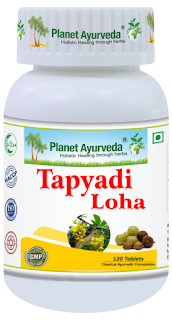
Tapyadi Loha – Medicinal Properties, Ingredients, Indications, Dosage & More

Reference : Ayurved Saar Sangreh– Loh-mandoor-prakaran

Abstract

Tapyadi Loha is a classical Ayurvedic herbo-mineral formulation indicated primarily in Pandu Roga (Anemia), Kamala (Jaundice), Yakrit-Pleeha Vikara (Liver-Spleen disorders), Shotha (edema), and Stree Rajodushti (Menstrual disorders). It is particularly effective in post-malarial anemia and chronic debility, where depletion of Rasa and Rakta Dhatus (body tissues associated with the lymphatic system and blood) is evident. This formulation is known to boost hemoglobin levels, stimulate digestion, and revitalize organ function. It strengthens the bone marrow, enhances immunity, and improves the systemic strength of sensory and motor organs.

Introduction

In Ayurveda, the condition of Pandu (anemia) is characterized by the pallor of the skin, fatigue, breathlessness, and weakness due to impaired Rasa and Rakta dhatu (body tissues associated with the lymphatic system and blood) production. This is commonly aligned with iron-deficiency anemia and post-infectious syndromes in modern medicine. Tapyadi Loha addresses the core pathology by stimulating Agni (digestive fire), enhancing Rakta Dhatu utpatti (formation of blood tissues), and aiding in the detoxification and rejuvenation of liver-spleen functions. The presence of Raupya Bhasma (Calcined Silver Ash) makes this variant especially potent in nourishing Ojas and promoting systemic strength (Balya).

Classical Indication

Pandu (Anemia)

Ingredients (As Per Classical Text)

  1. Haritaki – Terminalia chebula – 2½ parts
  2. Bibhitaki – Terminalia bellirica – 2½ parts
  3. Amalaki – Emblica officinalis – 2½ parts
  4. Shunthi – Zingiber officinale – 2½ parts
  5. Maricha – Piper nigrum – 2½ parts
  6. Pippali – Piper longum – 2½ parts
  7. Chitraka Moola – Plumbago zeylanica – 2½ parts
  8. Vidanga – Embelia ribes – 2½ parts
  9. Nagarmotha – Cyperus rotundus 1½ parts
  10. Pippali Moola – Piper longum – 1 parts
  11. Devdaru – Cedrus deodara – 1 part
  12. Daruharidra – Berberis aristata – 1 part
  13. Dalchini – Cinnamomum zeylanicum – 1 part
  14. Chavya – Piper retrofractum – 1 part
  15. Shuddha Shilajit – Purified Asphaltum– 10 Parts
  16. Swarna Makshik Bhasma – Calcined Chalcopyrite (Gold-Pyrite Ash)– 10 Parts
  17. Raupya Bhasma – Calcined Silver Ash– 10 Parts
  18. Loha Bhasma – Calcined Iron Ash – 10 Parts
  19. Mandura Bhasma – Calcined Red Iron Oxide (Ferric Oxide Ash) - 20 Parts
  20. Mishri – Rock Sugar (Crystallized Sugar) – 32 Parts

Tapyadi Loha by Planet Ayurveda

Description Of Key Ingredients

1. Haritaki (Terminalia chebula)

It is Kashaya (astringent) in taste with Ushna Veerya (hot potency) and Laghu-Ruksha (light and dry qualities). It balances all three doshas, especially Vata (air element), and acts as a mild laxative, detoxifier, and Rasayana (rejuvenative). In Tapyadi Loha , it supports digestion, corrects Apachana (malabsorption), and enhances systemic detoxification.

2. Bibhitaki (Terminalia bellirica)

Possessing Kashaya-Ruksha rasa (astringent and dry taste) and Ushna Veerya (hot potency), it pacifies Kapha (water element) and Vata (air element) dosha. It supports respiratory health, improves metabolism, and is useful in Shotha (inflammation) and excessive mucus production. It works as a supportive herb in Pandu (anemia) and chronic infections.

3. Amalaki (Emblica officinalis)

Rich in Amla Rasa (sour taste) and Sheeta Veerya (cold potency), Amalaki is Tridosha-shamaka (balances all three doshas), especially beneficial for Pitta (fire element). It is a powerful antioxidant and Rasayana (rejuvenative), improving liver function, blood quality, and immunity in long-standing Jwara (fevers) and Pandu (anemia).

4. Shunthi (Zingiber officinale)

It has Katu Rasa (pungent taste) and Ushna Veerya (hot potency), acting as Deepana (appetizer), Pachana (digestive), and Shothahara (anti-inflammatory). It reduces Ama (metabolic toxins), corrects Mandagni (weak digestive fire), and is beneficial in chronic fevers and malabsorption syndromes (Grahani-like conditions).

5. Maricha (Piper nigrum)

Maricha is Katu Rasa (pungent taste) and Ushna Veerya (hot potency), and it pacifies Kapha (water element) and Vata (air element). It improves appetite, stimulates Agni (digestive fire), and facilitates the absorption of nutrients and medicines. It acts as a Yogavahi (catalyst), enhancing the efficacy of other herbs in Tapyadi Loha.

6. Pippali (Piper longum)

It has Madhura Vipaka (sweet post-digestive effect) with Ushna Veerya (hot potency). Pippali enhances metabolism, supports respiratory strength, and acts as Rasayana (rejuvenative) in chronic Jwara (fevers) and Pandu (anemia). It is particularly useful in enhancing Dhatu-agni (tissue metabolism) and Rasa Dhatu (plasma tissue) formation.

7. Chitraka Moola (Plumbago zeylanica)

With Katu Rasa (pungent taste) and Ushna Veerya (hot potency), Chitraka is a potent Deepana (appetizer) and Pachana (digestive) herb. It clears Ama (toxins), supports spleen and liver function, and is highly effective in indigestion and low-grade chronic Jwara (fevers).

8. Vidanga (Embelia ribes)

Katu-Tikta Rasa (pungent-bitter taste) and Ushna Veerya (hot potency) make Vidanga a potent Krimighna (anti-parasitic). It detoxifies the intestines, helps in chronic infections, and reduces obstruction in Rasavaha and Annavaha Srotas (plasma and food-carrying channels). It is useful in Pandu (anemia), Krimi (worms), and Grahani (malabsorption) conditions.

9. Nagarmotha (Cyperus rotundus)

It is Tikta-Kashaya Rasa (bitter-astringent taste) with Laghu-Ruksha (light-dry) qualities and Ushna Veerya (hot potency). It balances Kapha (water element) and Pitta (fire element) doshas, reduces inflammation, improves digestion, and helps in managing chronic fever syndromes (Vishama Jwara – irregular fevers).

10. Pippali Moola (Piper longum root)

The root of Pippali shares similar properties with the fruit but has stronger Deepana (appetizer) and Kapha-Vata hara (removes Kapha and Vata) action. It aids in strengthening digestion, breaking chronic Kapha (phlegm) obstructions, and enhancing vitality.

11. Devdaru (Cedrus deodara)

With Tikta-Katu Rasa (bitter-pungent taste) and Ushna Veerya (hot potency), Devdaru is useful in Kapha-Vata (phlegm-air) disorders. It is Shothahara (anti-inflammatory) and Vedanasthapaka (analgesic), helping relieve joint pains, Jwara (fever), and sluggish digestion.

12. Daruharidra (Berberis aristata)

It is Tikta-Kashaya Rasa (bitter-astringent taste) and has Ushna Veerya (hot potency). Daruharidra is renowned for its Raktashodhaka (blood-purifying), anti-inflammatory, and antibacterial properties. It supports liver function, reduces infections, and helps in Rakta (blood) and Pitta (bile)-related disorders.

13. Dalchini (Cinnamomum zeylanicum)

With Katu-Tikta Rasa (pungent-bitter taste) and Ushna Veerya (hot potency), Dalchini is Deepana (appetizer) and Hridaya-Uttejak (cardiac stimulant). It improves digestion, blood circulation, and helps control Ama (toxins)-related conditions and chronic Jwara (fevers).

14. Chavya (Piper retrofractum)

Katu Rasa (pungent taste) and Ushna Veerya (hot potency) make Chavya an excellent Pachana (digestive), Shoolahara (colic-reliever), and Srotoshodhaka (channel-cleansing). It removes Srotorodha (blockages in bodily channels), especially in the digestive and excretory systems, and aids in the management of Grahani (malabsorption) and Ama (toxins).

15. Shuddha Shilajit (Purified Asphaltum)

It is Tridosha-hara (balances all doshas) with Ushna Veerya (hot potency) and Yogavahi (synergistic/catalytic) properties. Shilajit enhances vitality, supports Rasayana (rejuvenation) action, and improves iron absorption and Dhatu Pushti (tissue nourishment). It is especially effective in Pandu (anemia), Jwara (fever), and Dhatukshaya (tissue depletion).

16. Swarna Makshik Bhasma (Calcined Chalcopyrite)

With Tikta-Kashaya Rasa (bitter-astringent taste) and Ushna Veerya (hot potency), it balances all Doshas (bio-energies), especially Kapha (phlegm). It is a potent Rasayana (rejuvenative) and enhances digestion, strength, and liver function. It supports Raktavardhaka (blood formation) and improves complexion.

17. Raupya Bhasma (Calcined Silver Ash)

Sheeta Veerya (cold potency) and Madhura-Kashaya Rasa (sweet-astringent taste), it pacifies Pitta (bile) and Vata (air). It enhances immunity, calms the nervous system, supports cardiac and reproductive health, and acts as a natural Rasayana (rejuvenative) in chronic diseases.

18. Loha Bhasma (Calcined Iron Ash)

Tikta-Kashaya Rasa (bitter-astringent taste) with Ushna Veerya (hot potency), Lauh Bhasma is a potent Raktavardhaka (blood builder). It is highly effective in Pandu (anemia), Shotha (inflammation), and enhances strength, stamina, and Ojas (vital immunity essence).

19. Mandura Bhasma (Calcined Ferric Oxide)

Mandura is Laghu (light), Ruksha (dry), and Ushna (hot potency). It helps in Pandu (anemia), Grahani (malabsorption), Arsha (piles), and Kamala (jaundice). It improves appetite, supports liver function, and enhances Raktotpatti (blood production).

20. Mishri (Rock Sugar)

It has Madhura Rasa (sweet taste) and Sheeta Veerya (cold potency), pacifying Pitta (bile) and Vata (air). Mishri acts as a coolant, harmonizes the formulation, improves palatability, and supports deeper tissue absorption of Bhasmas (calcined minerals) and herbs.

Method Of Preparation

  • All ingredients, including Mishri, are blended and triturated thoroughly to attain a uniform fine powder.
  • Then make the tablets of 3-3 ratti each (375 mg), and dry them.
  • Stored in a moisture-free, airtight glass container.

Medicinal Properties

  • Increases red blood cells and hemoglobin (Raktavardhak)
  • Enhances digestive fire (Agnideepak)
  • Tonic for liver and spleen (Pleehahara–Yakrituttejaka)
  • Rejuvenator and anti-aging tonic (Rasayana)
  • Reduces swelling and inflammation (Shothahara)
  • Regulates the menstrual cycle and hormones (Rajonashak)
  • Improves strength and vitality (Balya)

Indications

  • Anemia – especially post-febrile (Pandu Roga)
  • Jaundice due to liver dysfunction (Kamala)
  • Hepatosplenomegaly (Yakrit-Pleeha Vriddhi)
  • Post-malaria convalescence
  • Menstrual disorders in women (Rajodushti)
  • Dhanurvata and Grahadosha (Tetanus and viral diseases) in children
  • Chronic edema with pallor
  • General fatigue and loss of appetite

Impact On Dosha

  • Pacifies Pitta and Kapha
  • Kindles Agni and removes Ama
  • Strengthens Rasa-Rakta Dhatu (body tissues associated with the lymphatic system and blood)

Dosage

3 Ratti (approx. 375 mg) Twice daily

  • Anupana: With Mooli Swarasa (radish juice) or Gomutra (cow’s urine), as per the disease condition
  • Advised under the supervision of a qualified Ayurvedic physician

Contraindications

  • Not suitable in Pitta-dominant hypermetabolic conditions without careful supervision
  • Avoided in pregnancy without clinical guidance
  • Should be used cautiously in children or during the febrile stage of infection

Conclusion

Tapyadi Loha is a time-tested rejuvenating (Rasayana) formulation from classical Ayurvedic texts, designed to counter various liver-spleen disorders. It operates at a foundational level—stimulating Agni (digestive fire), enriching Rakta Dhatu (blood tissues), detoxifying the liver (Yakrit), and rebuilding physical strength. The synergy of potent Bhasmas (ash) with Deepana-Pachana (appetizer-digestive) herbs makes it ideal for chronic anemia, debility, and nutritional deficiency disorders. This formulation, when administered appropriately under clinical supervision, not only corrects pathological imbalances but also restores systemic vitality and immune resilience.

Monday, June 16, 2025

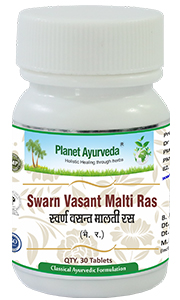
Swarn Vasant Malti Ras - Medical Properties, Indications, Dosage & More

Reference – Bhaishajya Ratnavali – Jwara Chikitsa Adhikar, Chapter 5, Verses 1183-1184

Abstract

In the era of chronic fevers, recurrent infections, and lifestyle-induced immunity collapse, Ayurveda offers age-old solutions with time-tested efficacy. Swarna Vasant Malti Ras is a revered classical herbo-mineral Ayurvedic preparation specifically known for its rejuvenative and immune-enhancing properties. It is especially useful in managing chronic fevers, respiratory ailments, and wasting conditions. With increasing resistance to antibiotics and the growing burden of immunocompromised states, Swarna Vasant Malti Ras stands as a gold-standard Rasayana, reviving health, vitality, and inner strength. Let's explore this potent formulation in depth.

Introduction

Swarna Vasant Malti Ras is a traditional Ayurvedic compound known for its role in combating fevers, tuberculosis, and general debility. The name itself indicates its richness—Swarna (Gold), Vasant (Spring, symbolizing rejuvenation), and Malti (a fragrant flower, symbolizing vitality and subtle energy). It belongs to the Rasaushadhi category, indicating its herbo-mineral nature with potent Rasayana (rejuvenative) effects. The formulation is well-documented in classical texts and has stood the test of time in treating conditions associated with weakened immunity and chronic infections.

Classical Indication

Jwara (fever)

Ingredients

(As per Bhaishajya Ratnavali)

  1. Swarna Bhasma – 1 part
  2. Mukta Bhasma (Pearl calx) – 1 part
  3. Maricha (Piper nigrum) – 2 parts
  4. Kharpara Bhasma (Zinc calx) – 1 part
  5. Rasaka Bhasma (Calamine or zinc ore calx) – 1 part
  6. Pippali (Piper longum) – 2 parts
  7. Juice of Vasa (Adhatoda vasica) – Quantity sufficient for Bhavana (levigation)

Swarn Vasant Malti Ras by Planet Ayurveda

Description of the Ingredients

1. Swarna Bhasma (Gold calx)

It is known for its Rasayana, Balya (strengthening), and Medhya (cognitive-enhancing) properties. It has Sheeta Veerya (cool potency) and Madhura-Tikta (sweet-bitter) rasa, making it ideal for rebuilding strength post-chronic illness and boosting ojas (vital energy).

2. Mukta Bhasma (Pearl calx)

This bhasma possesses cooling potency and is rich in natural calcium. It pacifies Pitta and provides strength to the heart, brain, and bones. It is especially useful in fevers with irritability or burning sensations.

3. Maricha (Black pepper)

A well-known deepana and pachana (digestive stimulant). It improves Agni (digestive fire) and enhances the bioavailability of other ingredients. It also helps eliminate ama (toxins) and clears the respiratory channels.

4. Kharpara Bhasma (Zinc calx)

It has Balya and Rasayana properties. It is useful in promoting immunity and strengthening depleted dhatus. In classical texts, it is used in rajayakshma and shosha (tuberculosis-like) conditions.

5. Rasaka Bhasma

This bhasma is traditionally used in the management of chronic fevers and respiratory ailments. It is effective in reducing kapha accumulation and supports lung function.

6. Pippali (Long pepper)

A powerful bio-enhancer and rejuvenator. It promotes appetite, enhances metabolism, and is useful in kshaya and rajayakshma. It balances Vata and Kapha doshas.

7. Vasa Swarasa (Adhatoda vasica juice)

This herbal juice is used as a levigation medium; it has mucolytic, anti-inflammatory, and anti-pyretic properties. It is particularly beneficial in managing chronic cough and respiratory distress.

Method of Preparation

  • All ingredients are taken in specified quantities.
  • The mixture is levigated with fresh juice of Vasa (Adhatoda vasica) for several hours using a Khalwa Yantra (stone mortar and pestle).
  • The paste is rolled into small tablets (vatis) of approximately 125 mg each.
  • Tablets are dried in a shaded area and stored in airtight containers.

Medicinal Properties

  • Chronic fever (Jirna Jvara) – This formulation is administered with honey and Tulsi juice to reduce fever recurrence and strengthen immunity.
  • Respiratory distress (Shvasa) – It is used with Vasa Swarasa to ease breathing and support lung function.
  • Chronic cough (Kasa) – Combine with honey and Sitopaladi Churna to soothe the throat and clear phlegm.
  • Tuberculosis-like wasting (Rajayakshma) – Take with milk or Guduchi decoction to rebuild strength and support tissue regeneration.
  • General debility (Daurbalya) – Give with milk and ghee to restore energy and vitality post illness.
  • Weak digestion (Mandagni) – Use with dry ginger decoction or cumin water to enhance Agni and improve digestion.
  • Immune deficiency (Ojokshaya) – Administer with Amla or Guduchi juice to rejuvenate Ojas and increase resistance.
  • Wasting disorders (Kshaya) – Mix with Ashwagandha Churna and milk to improve strength and combat tissue loss.
  • Menstrual weakness (Stri-daurbalya) – Use with Dashmoolarishta or Ashokarishta for hormonal balance and energy.
  • Post-illness recovery (Roganutthanavastha) – Combine with Draksha juice or warm milk and honey to support convalescence.

Impact on Dosha

Pacifies Vata, Pitta, and Kapha, with a specific focus on Vata-Kapha disorders.

Indications

  • Chronic and recurrent fevers (Jeerna Jwara)
  • Tuberculosis-like symptoms (Rajayakshma)
  • Wasting disorders or emaciation (Kshaya)
  • Chronic cough (Kasam)
  • Respiratory distress or asthma (Shvasa)
  • General debility or weakness (Daurbalya)
  • Weak digestive fire (Mandagni)
  • Low immunity due to prolonged illness
  • Anemia and chronic fatigue syndromes

Dosage

Adult Dose: 125 mg to 250 mg once or twice daily with honey or Vasa juice.

Pediatric use: Only under the supervision of a qualified Ayurvedic physician.

Anupana (Adjuvant): Honey, ghrita, or Vasa swarasa depending on the condition.

Contraindications

Not advised in pregnancy or without medical supervision.

Should not be used in high Pitta conditions without cooling adjuvants.

Requires careful dosage and monitoring in children.

Why Choose Planet Ayurveda’s Swarna Vasant Malti Ras?

  • Prepared under the strict supervision of expert Ayurvedic physicians.
  • Follows classical text formulations with modern quality assurance.
  • Uses pure Swarna Bhasma and other authentic ingredients.
  • 100% vegetarian, free from preservatives, chemicals, and synthetic additives.
  • A trusted solution for boosting immunity and managing chronic respiratory disorders.

Conclusion

Swarna Vasant Malti Ras is a potent herbo-mineral Rasayana that rejuvenates body and mind, strengthens immunity, and supports respiratory health. This formulation is enriched with Swarna and other vital minerals, which have proven to be invaluable in chronic fevers, respiratory ailments, and emaciation. Its synergistic formulation makes it highly effective in restoring dhatu balance and building ojas in the body. It is advised to use this formulation with expert guidance and proper use, this Rasayana becomes a timeless ally in the journey toward holistic health.

Wednesday, April 2, 2025

Neelibhringadi Taila (Oil) – Benefits, Usage, Indications and Dosage

Reference - Sahasrayogam 3/51 : Keraliya Ayurvedic Classical Text

Introduction

Neelibhringadi taila is a Keraliya ayurvedic oil. It is very effective in promoting hair growth, preventing hair fall, hair loss and treat split ends.

Ingredients

  • Neeli (Indigofera tinctoria)
  • Bhringaraja (Eclipta alba)
  • Yashtyahwa (Glycyrrhiza glabra)
  • Gunja (Abrus precatorius)
  • Anjana (Berberis aristata)
  • Dhatri (Emblica officinalis)
  • Satakratulata-Indravaruni (Citrullus colocynthis) / Kakadani (Abrus precatorius)

Description of Main Ingredients

  • Neeli - Its lekhan property is useful for treating cataract and other eye conditions. Leaves are used to dye and nourish hair.
  • Bhringaraj - It promotes hair growth and hair dye. Grey hair turns to black, if juice is applied over the scalp.
  • Dhatri - Hair wash by amla is done in baldness and grey hair. Useful in chronic fever, thirst, burning sensation etc.

Composition

  • Kalka(Paste) dravya -
    • Yashtyahwa
    • Gunja
    • Anjana - 48gms each
  • Drava (liquid) dravya -
    • Neeli
    • Bhringaraja
    • Satakratu lata (Indravaruni/Kakadani)
    • Dhatri (Amalaki) phala Swarasa - 768ml
  • Sneha Dravya (Oil) -
    • Taila(coconut/sesame) - 768ml
  • Ksheera (Animal milk) -
    • Aja ksheera - 768gms
    • Nalikera ksheera - 768gms
    • Mahisha ksheera - 768gms
    • Dhenudbhava (go) ksheera - 768gms

Procedure

  • Prepare taila with the above dugs viz. Kalka,Sneha and Drava Dravyas taken in the specified quantity.
  • Take juices,animal milks and oil. Prepare paste using water/milk. Then, mix all the ingredients and heat the mixture till only oil is left behind.
  • This left over oil is Neelibhringadi Taila. Let this cool down and strain it. Now, this is ready to use.

How To Use It?

This is only for external applications. Apply over the scalp and massage for 5 minutes. Also can apply for 30 minutes before headwash.

Medicinal Properties

Kesya (External use) - Neelibhringadi taila is an ayurvedic formulation and is effective for hair growth and premature greying of hair. It has anti-inflammatory properties and also anti-dandruff effects.

Indications

  • Hair loss and baldness
  • Premature greying of hair
  • Hair fall
  • For split hair
  • Dandruff
  • Itching
  • Scalp infection
  • Scalp acne
  • Tinea capitis (fungal infection)

Cautions

If you want to apply for a longer time, then take advice from a doctor.

Eladi Thailam (Oil) – Benefits, Usage, Indications and Dosage

Reference - Sahasrayogam 3/25: Keraliya Ayurvedic Classical Text

Introduction

Eladi taila is a Keraliya ayurvedic oil. It is effective for treating skin diseases. Reduces pruritus and pigmentations. It improves complexion and lightens the skin.

Ingredients (Eladi gana dravya)

  • Ela yugma/Brihat ela (Amomum subulatum)
  • Turuksha/Tuvaraka (Hydnocarpus laurifolia)
  • Kushta (Saussurea lappa)
  • Phalini/Priyangu (Callicarpa macrophylla)
  • Mamsi/Jatamansi (Nardostachys jatamansi)
  • Jaladhyamaka/Balaka (Coleus zeylanicus)
  • Sprikka (Delphinium zalil)
  • Chocha/Twak/Dalchini (Cinnamomum zeylanicum)
  • Tagara (Valeriana wallichii)
  • Sthouneya (Taxus baccata)
  • Jatirasa/Javitri (Myristica fragrans)
  • Shukti (Ostrea edulis)
  • Vyaghranakha (Capparis sepiaria)
  • Amarahwa/Devadaru (Deodar cedar)
  • Aguru (Aquilaria agallocha)
  • Srivasaka/Sriveshtaka/Sarala (Pinus longifolia)
  • Kumkuma/Kesar (Crocus sativus)
  • Chanda/Keukand (Costus speciosus)
  • Guggulu (Commiphora mukul)
  • Devadhoopa (Shorea robusta)
  • Khapura/Shallaki (Boswellia serrata)
  • Punnaga/Sultan champa (Calophyllum inophyllum)
  • Nagahwaya/Nagakesara (Mesua ferrea)

Description of Main Ingredients

  • Ela yugma - Deodorant,analgesic,cures skin diseases and has wound healing property. The decoction is used for gargling in oral and ear disorders. Application of paste relieves headache and pruritic disorders.
  • Tuvraka - Tuvaraka is best medicine for skin diseases. It also has antipruritic, antiparasitic, cleaning and healing of wounds and curative properties. Oil is used for local application in skin disorders. Useful in ascites. Also a blood purifier.
  • Kushta - Increases sweating, kushtaghna, therefore used in skin diseases. It improves blood circulation and complexion of the skin.
  • Phalini - It is useful in bleeding disorders, skin problems, pitta prameha, dysentery. Also useful in painful conditions. It helps in reducing excessive perspiration, burning sensation, headache.
  • Mamsi - Paste is used in burning of skin. It improves the complexion and is antipyretic. Paste is also used in inflammation and pain. It's fine powder is used in excessive sweating and reducing foul smell of sweat.

Composition

  • Kalka (Paste) dravya - All the dravya of Eladi gana.
  • Drava (liquid) dravya - Water
  • Sneha(oil) dravya - Murchhita tila taila / sesame oil / coconut oil

Preparation

  • Take all the kalka dravya in powder form and make a paste adding a small quantity of water.
  • Now, mix this paste with drava dravya (water) and sneha dravya ( oil).
  • Then, heat all the dravya until only oil content remains or water content evaporates.
  • Now, let it cool down.
  • In the last, filter the eladi taila and discard the residues.

Dosha Karma

Eladi tailam pacifies Vata and Kapha.

Pharmacological actions

  • Antipruritic
  • Demulcent
  • Anti-urticaria
  • Anti-inflammatory

Indications

  • Pruritus
  • Urticaria
  • Boils
  • Eczema
  • Leucoderma
  • Dry skin
  • Acne scars

Medicinal Properties

Eladi taila is effective for treating skin diseases.It allievates pruritus and pigmentations. It enhances the complexion and lightens the skin. Its local applications are beneficial for skin detox. Also treat diseases of gums and mouth.

How To Use It?

Take a few drops of eladi taila and apply it on the affected part of the skin. Leave it for several hours or overnight. It should be used 2-3 times a day.

Side Effects

  • No side effects if your skin is not oily.
  • If you have oily skin associated with open pores, it may have bad effects.

Tuesday, January 21, 2025

Yakrit Plihantak Churna (Liver Detox Remedy)- Health Benefits, Ingredients, Research, Dosage & Reviews

ABSTRACT

The organ that has to work the hardest to maintain our health and fitness is the liver. The liver processes everything we eat, and if it isn't functioning well—that is, if its health isn't up to par—it won't be able to break down food or shield us from dangerous substances. Liver assists in transforming everything we eat into a form that the body can absorb and use without harming us. But how long will it hold everything there? Our livers break down everything we ingest, including poisons, and in the process, they injure our hepatocytes, or liver cells. If we carry on in this manner, we eventually develop a variety of illnesses, such as fatty liver and liver cirrhosis. It is our responsibility to keep our liver safe from poisons and dangerous chemicals, as it defends us against them. Maintaining a healthy diet and way of life is important, but so is treating yourself to Yakrit Plihantak Churna, an excellent combination of herbs that serves as a superb Ayurvedic liver cleanser. You will also be able to review this fantastic liver detox remedy in this article.

INTRODUCTION

Planet Ayurveda produced the Yakrit Plihantak Churna as a Herbal Remedy for Liver Diseases. This churna is the perfect herbal remedy to maintain general liver health because it contains eight different herbs, all of which have cleansing and liver-protective qualities. The ingredients in this remedy include makoy (Solanum indicum), bhumi amla (Phyllanthus niruri), katuki (Picrorhiza kurroa), and five more, which we will go into more depth about along with their amazing capabilities and the reasons they are used in this herbal remedy. We'll now discuss yakrit plihantak churna and the benefits and features of the herbs used in it.

INGREDIENTS OF YAKRIT PLIHANTAK CHURNA

  1. Bhumi Amla (Phyllanthus niruri): This herb includes bitter, astringent and sweet taste with dry, cold and easy to digest properties. It supports anti-viral,  laxative, antispasmodic, hepato-protective and hypoglycemic effects. It helps prevent liver damage and restore the function of the liver because of its antioxidant effects. This herb helps to preserve the health of the spleen by modulating its activity, thanks to its detoxifying qualities.
  2. Kalmegh (Andrographis paniculata):Because of its neem-like taste, kalmegh (Andrographis paniculata) is also known as bhu nimb. It also aids in controlling the liver's enzyme levels. Moreover, its bitter flavour effectively eliminates any related skin irritations, including rashes, pimples, and itching. It has immune-stimulating qualities that help treat liver infections.
  3. Bhringraj (Eclipta alba): Its antioxidant and liver-protective properties prevent damage from free radicals to the liver cells. Taking Bhringraj (Eclipta alba) helps relieve ascites and manage urinary difficulties since it has diuretic qualities, which improve urine flow. Bhringraj (Eclipta alba) is beneficial in treating GI problem symptoms including contractions or spasms in the stomach, bladder, or intestines because of its antispasmodic qualities.
  4. Punarnava (Boerhavia diffusa):Its antioxidant qualities shield the Liver from injury caused by free radicals. Its laxative qualities aid in the maintenance of bowel movement, the relief of stomach problems, and the reduction of abdominal pain associated with digestive disorders like constipation. It also reduces hunger, which helps with weight loss. Excellent diuretic qualities of this herb help relieve the body of fluid retention.
  5. Makoy (Solanum indicum):It's called tridosha ghan, or tridosha pacifier, and it contains diuretic qualities that help the body eliminate toxins and lower the risk of developing ascites. The Makoy (Solanum indicum) herb helps maintain a healthy Liver by promoting the regulation of Liver Enzymes. The taste of the herb is bitter with an aftertaste of pungent. It helps reduce endotoxin accumulation because of its potent laxative qualities.
  6. Kutki (Picrorhiza kurroa): Katuki (Picrorhiza kurroa) is considered a vital herb for spleen purification and Liver rejuvenation. It removes ama dosha (endotoxins) and regulates blood sugar. Pitta pacifier, the property of kutki (Picrorhiza kurroa), controls the release of digestive enzymes. It works well as a detoxifier, antimicrobial, anti-inflammatory, and antibiotic. It boosts metabolism generally and improves digestion.
  7. Kasni (Cichorium intybus):By giving the stool more volume and boosting the number of beneficial bacteria in the intestines, kasani (Cichorium intybus) relieves constipation. Kasani (Cichorium intybus) is helpful in eradicating gall bladder stones from the body due to its Pitta balancing qualities. Kasani's (Cichorium intybus) antioxidant activity makes it a highly effective way to stop free radicals from causing harm to the liver. If consumed regularly, kasani (Cichorium intybus) juice may also improve digestion, which will increase appetite.
  8. Sharpunkha (Tephrosia purpurea): Sharpunkha (Tephrosia purpurea) possesses therapeutic, antibacterial, diuretic, antiparasitic, and anti-hyperglycemic qualities. It improves digestive health and efficiently increases bile production and excretion. When it comes to viral hepatitis, liver damage, liver cirrhosis, protein deficiency, UTIs, and other liver-spleen disorders, it works well. It helps both the regeneration of new liver cells and liver cleansing.

HEALTH BENEFITS OF YAKRIT PLIHANTAK CHURNA

Together, these herbs possess potent Pitta Eliminator, antioxidant, hepatoprotective and anti-inflammatory properties, as well as promoting healthy liver function (Yakrit Uttejaka). Owing to all of these qualities, the Liver Detox Supplement helps to address the underlying reasons of any liver issue. Because of the qualities of this herbal powder, the liver can be cleansed of toxins, hepatocytes, or liver cells, can be rejuvenated, and inflammation can be decreased. This natural remedy is useful in following diseases:

  • Hepatomegaly
  • Jaundice
  • Ascites
  • Hepatitis
  • Liver cirrhosis
  • Anaemia
  • Alcoholic Liver Disease
  • Splenomegaly
  • Prevent various complications of Liver Diseases such as Low platelets, Bleeding, Frequent infections, Dark urine, Skin diseases, Vomiting, Nausea, Chronic fatigue, Indigestion, Abdominal pain, Anorexia
Yakrit Plihantak Churna, Liver Detox Remedy

RESEARCH ON YAKRIT PLIHANTAK CHURNA

Most of researches have been done on efficacy of Yakrit Plihantak Churna, one among them you can read after visiting this link:
www.researchgate.net/publication/288813838_Standardization_of_Yakrit_Plihantak_Churna_An_ayurvedic_polyherbal_formulation. This Research article announces the standardisation of this herbal remedy mainly as hepatoprotective. For this Research the sample of Yakrit Plihantak Churna was collected from the Local Market. The reference for the microscopic characteriszation was actual ingredients. After standardisation, it was found that the market-sourced commercial sample matched the real standards exactly. The established metrics proved to be enough for assessing the examined churn and serve as a benchmark for quality assurance and control purposes.

DOSAGE OF YAKRIT PLIHANTAK CHURNA

  • In Children: ½ tsp once or twice
  • In Adults: 1 tsp twice
  • Note: Or as suggested by Ayurvedic Physician

REVIEWS ON YAKRIT PLIHANTAK CHURNA

Review Link: www.youtube.com/watch?v=BPPXnSEk0CM

  • Problem: Liver Cirrhosis
  • Brief Story: Patient found it bitter but the most effective remedy. After taking this remedy for 1 month she felt a lot of relief in her 15 years old problem.

Review Link: www.youtube.com/watch?v=hoN2p0FQKlY

  • Problem: Indigestion, Gas, Acidity, High B.P., Liver Problem
  • Brief Story: After Taking this herbal remedy for 2-3 days the patient felt relief in his problems. While taking this remedy patients avoid fried food, alcohol intake and nonvegetarian food. Patient’s words about Ayurveda “There is nothing above Ayurveda”.

Review Link: www.youtube.com/watch?v=DYR4DlOocLc

  • Problem: Weight Loss
  • Brief Story: Patient started taking Yakrit Plihantak Churna for weight loss, with 2 packages of 200gm Churna patient gained 8-9 kgs weight. “This is bitter but is a miraculous remedy” - Patient’s words.

Review Link: www.youtube.com/watch?v=rc8P8Lp3ahk

One Video for Reviews of Patients as well as Resellers in Foreign Countries. In this review video you will be able to learn about various Liver problems and Yakrit Plihantak Churna by its founder, Dr. Vikram Chauhan (M.D. Ayurveda).

CONCLUSION

Planet Ayurveda offers a wonderful herbal formula called Yakrit Plihantak Churna, which is also beneficial for the liver and spleen. This Yakrit Plihantak Churna is one of the best herbal treatments for the treatment of chronic liver patients and those who are advised to have a liver transplant. Anyone can use this herbal medicine to guard against any kind of health condition, as we all know that a healthy digestive system is crucial to keeping good health. Relax, all you need to do is incorporate this one herbal cure into your daily routine to witness the miracle.