Search This Blog

Dr. Vikram Chauhan - MD (Ayurveda)

Showing posts with label inflammatory bowel disease. Show all posts

Sunday, October 5, 2025

Get Rid of Chronic Ulcerative Colitis With Ayurveda

Abstract

Think of your colon as your body’s cleanup and recycling crew. After your stomach and small intestine do most of the digestion, the colon steps in to soak up water and salts, turning leftover food into solid stool. It also hosts a whole community of friendly bacteria that help break down fiber, make some vitamins, and keep your gut happy. But when the colon’s lining becomes inflamed and irritated and the colon is unable to form normal solid stools, we call it Ulcerative Colitis (UC). It is a chronic condition where your colon decides to act up, becoming inflamed and causing a variety of uncomfortable symptoms. People with UC often experience abdominal cramps, frequent or urgent trips to the bathroom, diarrhea, and sometimes rectal bleeding. The exact cause is still not fully understood, but it appears to be a combination of genetics, an overactive immune system, and environmental factors such as diet, stress, and gut bacteria imbalances. UC doesn’t just affect digestion- it can also drain energy, impact mood, and make everyday activities unpredictable or challenging. Managing the condition usually requires a careful mix of medications, dietary adjustments, and lifestyle changes to reduce flare-ups and maintain quality of life.
Ulcerative colitis

Introduction

Ulcerative colitis is a chronic form of inflammatory bowel disease (IBD) that leads to inflammation and the formation of ulcers in the digestive tract. It primarily targets the innermost lining of the large intestine, known as the colon and the rectum. This condition can cause persistent discomfort, irritation, and digestive disturbances. Rather than appearing abruptly, symptoms of ulcerative colitis typically develop gradually over time. The course of UC is often unpredictable, with alternating periods of remission- when symptoms are minimal or absent and during flare-ups, when discomfort and digestive issues become more pronounced. This constant uncertainty can take a toll not just on physical health, but also on emotional and social well-being.

Three Types of Ulcerative Colitis (On the Basis of Inflamed Part)

  • Ulcerative proctitis – The inflammation is limited to the rectum.
  • Left-sided colitis – The inflammation extends from the rectum up through the left side of the colon.
  • Pancolitis – The inflammation involves the entire length of the colon.

One of the major impacts of UC is on health-related quality of life (HRQoL), a term that describes how a person’s overall sense of well-being is influenced by illness and its treatment. People with UC generally report lower HRQoL compared to healthy individuals, with levels similar to those living with other gastrointestinal (GI) conditions. The daily challenges such as abdominal pain, frequent bowel movements, and fatigue. All these can interfere with work, social activities, and relationships. In Ulcerative Colitis the factors influencing HRQoL are multi-dimensional, including socio-demographic aspects (like age and lifestyle), clinical factors (severity and frequency of flares), psychological well-being (stress, anxiety, depression), and treatment-related aspects (side effects or complexity of therapy). Addressing these areas holistically is essential for improving overall life satisfaction in UC patients.

Cause/Risk Factors of Ulcerative Colitis

It is an auto-immune disease so no exact cause for this is known. While there are no known causes, some risk factors may lead up to development of this disease. They are:

  • Age factor: Most diagnoses occur between 15-30 years or after 60.
  • Race/Ethnicity: Higher risk in whites as compared to other races.
  • Genetics: Greater risk if a first-degree relative has UC.
  • Other Factors: Stress and diet don’t cause UC but can trigger flare-ups.

Symptoms

  • Loose stools, often the main symptom of ulcerative colitis.
  • Blood and mucous mixed stools.
  • Frequent bowel movements.
  • Abdominal or rectal pain.
  • Unpredictable episodes of diarrhea so the patient tries to avoid food.
  • Weight loss
  • Fatigue
  • Occasionally, constipation and rectal spasm.

Diagnosis

  • Blood Tests: Detect anemia (possible bleeding) and rule out infections.
  • Stool Samples: Identify infections, parasites, and inflammation.
  • Barium enema: Shows colon inflammation.
  • CT/MRI: Reveal inflammation in moderate/severe UC.
  • X-ray: Detects complications like megacolon or perforation.
  • Endoscopic Tests: Colonoscopy or sigmoidoscopy to view the colon, confirm inflammation, and take biopsies.

Treatment

Medications for UC Include

  1. Aminosalicylates: A class of anti-inflammatory drugs including Sulfasalazine (contains sulfa) for mild to moderate ulcerative colitis. A sulfa-free aminosalicylate such as mesalamine can be given in patients allergic to Sulfa.
  2. Corticosteroids: These are used to quickly control flare-ups. In a severe form of ulcerative colitis Prednisone or Budesonide are prescribed for short-term use.
  3. Immunosuppressants: To calm your immune system Azathioprine or Methotrexate can be used.
  4. Biologics: They treat moderate to severe ulcerative colitis by calming parts of your immune response. Medications like Infliximab, Adalimumab are biologics.
  5. Janus kinase (JAK) inhibitors (small molecule drugs): Drugs like Tofacitinib stop one of your body’s enzymes (chemicals) from triggering inflammation.

Surgery

Surgery is an option if medications aren’t working or if you’re experiencing serious complications. Proctocolectomy surgery is done to remove all or part of your colon and rectum.

Ayurvedic Overview

Ulcerative colitis in Ayurveda is Rakta Atisaara (bloody diarrhea). It is a disease of Purishavaha Srotas (Faeces carrying channels). This Srotas has its Mula (Roots) in Pakvashaya (large intestine or more specifically colon) and Sthoolaguda (Rectum). Therefore, on Dushti (Vitiation) of this Srotas (Channel), diseases develop in these regions, like Rakta Atisaara (bloody diarrhea). Rakta Atisaara is a type of Atisaara (Diarrhea), which is produced in a patient of Pittaja Atisaara, who is indulging in diet and lifestyle aggravating Pitta dosha. When a person of Pitta constitution repeatedly consumes sour, salty, pungent, alkaline, hot food and is in constant exposure to fire, scorching sun, hot winds, Pitta dosha aggravates. Purishavegadharan (Holding up of the urge for defaecation), Atiashana (overeating), eating during indigestion and when the previous meal is not digested particularly in a person with poor digestion, are also contributing factors. All these factors and aggravated Pitta dosha affects Rakta Dhatu (Blood Tissue) and quickly produces Rakta Atisaara (Bloody Diarrhea) along with pain, burning sensation and inflammation in anorectal region.

Symptoms seen in patients with Rakta Atisaara are Atidrava mala pravritti (frequent passage of loose, watery stools mixed with blood), Shoola (gripping or cramping abdominal pain before or during defecation), Pitta-purna mala (stools having a foul smell, reddish/yellowish discoloration, and sometimes mucus), Daha (burning sensation in the anal region and abdomen), Pipasa adhikya (excessive thirst due to dehydration), Aaruchi (loss of appetite) and Dourbalya (generalized weakness and fatigue). Ayurvedic Treatment for Ulcerative Colitis in Ayurveda involves use of Ajadugdha (Goat milk), Neelutpalaadi Yog, Shatavari, Darvyaadi Ghrita, Priyungakadi Raktsangrahak Yog, Pichabasti, Navneet (freshly churned butter). In case of excessive loss of blood in stool, Ghrita Alepana (external application or smearing) on Guda (anal region), Vankshana (inguinal region), Kati (Lower back/waist) and Urupradesha (region involving thighs) is done. Pitta pacifying lifestyle also helps in relieving Rakta Atisaara.

Dietary Habits and Lifestyle Modifications

  • Follow diet- Favor cool, sweet, bitter, and astringent foods. Use minimal oil and moderate spices.
  • Avoid- Excessively hot, sour, salty, or fried foods, very hot beverages.
  • Water intake- Drink plenty of cool water.
  • Physical exercise- Excessive physical exercises are to be avoided.
  • Yogasana- Asanas which put pressure on the abdomen are to be avoided.

Herbal Remedies for Chronic Ulcerative Colitis by Planet Ayurveda

Planet Ayurveda is a trusted Ayurvedic brand offering herbal products made from pure, natural ingredients. Their formulations are designed to balance doshas, support immunity, and promote overall health. By combining traditional Ayurvedic knowledge with modern quality standards, Planet Ayurveda provides safe and effective wellness solutions for daily health needs. For Chronic Ulcerative Colitis, we have a Double Strength UC pack consisting of 13 medicines to provide relief from the symptoms and cure UC naturally. The medicines are:

  • Kutajghan Vati
  • Atisaran Mukti Capsules
  • Pitta Balance
  • Vatsakadi Churna
  • Arjuna Capsules
  • Motion Stop Tablets
  • Vasaka Capsules
  • Coolstrin A Capsules
  • Coolstrin B Capsules
  • Aegle Plan Capsules
  • Halorhena + Capsules
  • Hemostop-B
  • Mimosa-Di Capsules

Product Description

1. Kutajghan Vati

These tablets are made from Kutaj (Holarrhena antidysenterica), also known as Indrajav or Kurchi, which is considered a specific drug in Ayurveda for Atisara (diarrhea) and Grahani Roga (IBS-like conditions). It balances Pitta and Kapha Dosha and is mildly supportive to Vata dosha when aggravated due to diarrhea. It is highly beneficial in maintaining intestinal balance, stopping excessive watery stools, and healing intestinal mucosa.
Dosage - 2 tablets twice daily with plain water after meals.

2. Atisaran Mukti Capsules

These capsules are prepared with potent herbs such as Kutaj (Holarrhena antidysenterica), Bilva (Aegle marmelos), Saunf (Foeniculum vulgare), Dhaniya (Coriandrum sativum), and Nagarmotha (Cyperus scariosus). It helps to bring back balance in doshas, reduce constipation, maintain regular bowel movements and reduce inflammation of the intestine.
Dosage - 1 capsule, twice daily with plain water after meals.

3. Pitta Balance

These capsules contain key ingredients such as JaharMohra Pishti, Kaharava Pishti and Kamdudha Ras. It helps in balancing the Pitta dosha and provides a cooling effect to the body. It significantly reduces inflammation in intestines and provides support to the digestive system.
Dosage - 1 capsule, twice daily with plain water after meals.

4. Vatsakadi Churna

This is a herbal powder made from key ingredients like Kutaj (Holarrhena antidysenterica), Bilva (Aegle marmelos), Saunf (Foeniculum vulgare) and Dhaniya (Coriandrum sativum). Together, these herbs balance our Tridoshas (Vata, Pitta and Kapha), provide a synergistic effect in Ulcerative Colitis (Raktatisara) by reducing inflammation, controlling diarrhoea, checking bleeding, soothing abdominal discomfort, and promoting mucosal healing.
Dosage - 1 teaspoonful twice daily with plain water after a meal.

5. Arjuna Capsules

These capsules are made from potent Arjuna (Terminalia arjuna), a well known cardiotonic herb. It possesses an astringent taste and cooling potency, which help in balancing Pitta and Kapha dosha. Owing to its kashaya rasa (astringent taste), it exhibits stambhana (hemostatic) action and aids in controlling Ati Rakta Pravriti (excess bleeding).
Dosage - 1 capsule, twice daily with plain water after meals.

6. Motion Stop Tablets

These tablets have key ingredients like Kutaj (Holarrhena antidysenterica), Bilva (Aegle marmelos), Dadim (Punica granatum) and Haridra (Curcuma longa). This formulation helps in maintaining healthy digestion by improving the digestive fire and nutrient absorption. It also supports regular bowel habits, ensuring proper elimination and comfort. By balancing Vata and Pitta doshas, it promotes overall digestive harmony and reduces issues like irregularity, acidity, and abdominal discomfort.

Dosage 2 tablets twice daily with plain water after meals.

7. Vasaka Capsules

These capsules have Vasa (Adhatoda vasica) as its chief and only component. It is highly effective in pacifying aggravated Pitta dosha, which plays a central role in the pathogenesis of Ulcerative Colitis (Raktatisara). By reducing excessive heat and inflammation in the intestines, it helps relieve hyperacidity, mucosal ulcerations, and intestinal irritation.

Dosage 1 capsule, twice daily with plain water after meals.

8. Coolstrin A Capsules

These capsules are enriched with powerful herbs such as Sheesham (Dalbergia sissoo), Vasaka (Adhatoda vasica), Anar (Punica granatum), and Arjuna (Terminalia arjuna). This unique blend helps control bleeding, strengthens the immune system, and provides a soothing, calming effect to the body.

Dosage 1 capsule, twice daily with plain water after meals.

9. Coolstrin B Capsules

These capsules are made from potent medicinal plants including Nagkesar (Mesua ferrea), Mochrus (Salmalia malabarica), Lodhra (Symplocos racemosa), Dhataki (Woodfordia fruticosa), and Lajjalu (Mimosa pudica). This herbal combination works to harmonize Pitta dosha and supports healing of the ulcers along with reducing mucous formation.

Dosage 1 capsule, twice daily with plain water after meals.

10. Aegle Plan Capsules

These capsules are made using the extract of unripe Bilva (Aegle marmelos) fruit. The unripe fruit possesses pungent, astringent, and bitter qualities, which make it effective in balancing Kapha and Vata doshas. Acting as a natural sangrahi (absorbent), it supports proper nutrient assimilation and regulates intestinal movements.

Dosage 1 capsule, twice daily with plain water after meals.

11. Halorhena + Capsules

These capsules are made with the potent extract of Kutaj (Holarrhena antidysenterica). With its bitter-astringent taste and cooling potency, Kutaj helps restore the balance of all three doshas. It has conessine, holarrhenine, isoconessine—responsible for antimicrobial, anti-diarrheal, and anti-inflammatory effects.

Dosage 1 capsule, twice daily with plain water after meals.

12. Hemostop-B Powder

This powder consists of key ingredients like Jhandu (Tegetes erecta), Priyangu (Callicarpa macrophylla) and Parnabeej (Bryophyllum pinnatum). Their cooling potency balances Pitta dosha and helps in reducing inflamed intestines and provides relief in symptoms of UC patients.

Dosage 1 teaspoonful twice daily with plain water after meals.

13. Mimosa-Di Capsules

These capsules are made from single herb Lajwanti (Mimosa pudica), also called Lajjalu or the “Touch-Me-Not” plant. It is known for its healing and gut-strengthening qualities. With its naturally cooling and astringent-bitter taste, it helps balance excess Pitta and Kapha, making this capsule a great support for maintaining healthy digestion and intestinal health.

Dosage 1 capsule, twice daily with plain water after meals.

Contact Planet Ayurveda Support Team to provide you the costing/ordering and delivery information at – costing.planetayurveda@gmail.com or Call at 0172-521-4040 (India), +91-172-521-4040 (Outside India) or Whatsapp at (+91) 842-749-4030.

Conclusion

Chronic Ulcerative Colitis is a long-standing bowel disorder that affects many aspects of daily life. People suffering from this condition often experience abdominal pain, frequent loose motions, blood in stools, and constant fatigue, which can be both physically and emotionally draining. Modern medicine mainly focuses on controlling symptoms through medications that reduce inflammation or suppress immunity, but long-term relief is often difficult to achieve. Ayurveda, on the other hand, takes a holistic approach. Ayurvedic management works by correcting dosha imbalances, improving digestion, and allowing the natural healing of the intestinal lining. It plays a vital role in preventing flare-ups and restoring gut health. Planet Ayurveda offers authentic, safe, and effective herbal remedies prepared from standardized extracts which are known to soothe inflammation, strengthen the colon, and promote long-term balance in the digestive system. With Ayurveda and the trusted formulations of Planet Ayurveda, patients can achieve not just symptom relief but also improved overall well-being and a better quality of life.

Frequently Asked Questions (FAQ’s)

1. Can a person with ulcerative colitis live a normal life?
Many people with Ulcerative Colitis usually feel anxious about going out for social gatherings due to unpredictable episodes of diarrhoea, hampering their daily routine and social health as well. But with the right treatment, lifestyle modifications, diet and stress management, these flare ups can be managed and patients can lead a normal life.

2. Is Crohn's worse than ulcerative colitis?
Although ulcerative colitis and Crohn's disease are both long-term, inflammatory conditions but UC can be considered worse because continuous colon involvement in UC means higher risk of colorectal cancer, more severe rectal bleeding, major surgical risks (colectomy) and severe acute complications (toxic megacolon, perforation).

3. What is the difference between chronic colitis and ulcerative colitis?
The main difference between colitis and ulcerative colitis (UC) is the trigger. UC is an autoimmune reaction with no exact cause, whereas colitis can result from infections or from some particular medication use.

4. What can be mistaken for ulcerative colitis?
Conditions that have strong resemblance to UC are Crohn's Disease, Irritable Bowel Syndrome (IBS), Colon Infections, Colitis from other causes and sometimes diarrhea from medication reactions.

5. Does ulcerative colitis affect lifespan?
In research studies, it is seen that Ulcerative Colitis does not significantly affect life expectancy of the patients. The patients can lead a normal, healthy and long life as people without this inflammatory condition do.

Wednesday, November 17, 2021

Why did my doctor recommend colonoscopy? What symptoms indicate a need for a colonoscopy?

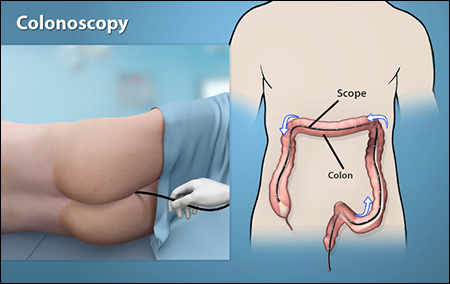
Colonoscopy is broadly used for the diagnosis and treatment of colonic disorders (Range of diseases, including inflammatory bowel disease – Crohn's disease and ulcerative colitis – diverticular disease and colon cancer. Colonoscopy, in which the doctor looks inside the colon of the patient with a thin, flexible tube that holds a tiny camera and light. Colonoscopy is one method that doctors use to diagnose UC and Crohn's diseases. A colonoscope is a long, thin flexible tube with a camera at the end. The doctor uses it to view the inside of your colon and rectum. In this article, we are going to put a lime light on when a patient is in need of a colonoscopy.

Colonoscopy

INDICATIONS FOR COLONOSCOPY

  • In lower Gastrointestinal bleeding
  • For the screening of colorectal polyps
  • Help to diagnose colon cancer, colorectal cancer
  • Acute and chronic diarrhea
  • Abnormal radiological examination
  • In unexplained abdominal pain
  • Long term chronic constipation

Inflammatory Bowel Disease (IBD) includes two conditions (Crohn's disease and Ulcerative colitis) that are characterized by chronic inflammation of the gastrointestinal (GI) tract. Long term inflammation results in damage to the GI tract. So we need to clear out the exact difference between Crohn's disease and ulcerative colitis and the need to do colonoscopy.

Ulcerative Colitis

Ulcerative colitis is an inflammatory bowel disease (IBD) that causes inflammation and sores  in the digestive tract. Ulcerative colitis affects the innermost line of intestine (colon) and rectum. Occurs in the large intestine (colon) and the rectum.

Symptoms:-

The most common symptoms are diarrhea, bleeding from the anal route and pain in the abdomen.

A colonoscopic finding in ulcerative colitis is swelling, redness, and sores in the intestine. It can show the severity of disease. It will help the doctor to make a correct diagnosis with a colonoscop

Endoscopic Score Of Ulcerative Colitis:-

  • Score 0 - Normal  
  • Score 1 - Mild disease  
  • Score 2 - Moderate disease 
  • Score 3 - Severe Ulceration

Crohn's Disease

Crohn's disease is a disorder mediated by t -lymphocytes cells which arises in genetically susceptible individuals because of  breakdown in the regulatory constraints  to enteric bacteria. Can affect any part of the GI tract (from the mouth to the anus) - Most often it affects the portion of the small intestine before the large intestine/colon.

Symptoms:-

  • Abdominal pain is the most common symptom
  • Chronic diarrhea
  • A feeling of fullness
  • Fever
  • A loss of appetite
  • Weight loss is a common symptom
  • Abnormal skin tags (usually on patient’s buttocks)
  • Anal fissures can be there

BASIC SYMPTOMS OF IBD WHEN A DOCTOR THINKS ABOUT COLONOSCOPY

Many of the same symptoms can indicate other problems, but in long term if following common symptoms persist then doctor may advise colonoscopy in Ulcerative Colitis Or Crohn’s Disease.

  • Abdominal Pain
  • Bloating
  • Chronic Fatigue
  • Blood in Stools
  • Narrow Thin Stools
  • Persistent Diarrhea
  • Constipation
  • Change in Bowel Habits
  • Weight Loss
  • Cramps

COLONOSCOPIC FINDINGS OF IBD

Cobblestoning (Uncommon finding) mucosa and linear ulcers characterize the endoscopic appearance of Crohn's disease. Inflammatory bowel disease (IBD) can be broadly classified into Crohn disease (CD) and ulcerative colitis (UC). It is a chronic idiopathic (Cause unknown) inflammatory disorder badly affecting the gastro-intestinal tract. Terminal ileum is not predominantly involved in Ulcerative colitis but is commonly involved in Crohn's diseases.

AYURVEDIC PERSPECTIVE OF IBD

Rakta Atisara

The vitiated pitta dosha and continuous hetu sevana cause depraved blood and hence rakta atisara. The symptoms include Daha i.e burning sensation, pain, thirst and guda pak i.e rectal abscess, rectal bleeding (Ch. Chikit. 19). Rectal blood is mixed with fecal discharge. The rise in symptoms is due to regular and excessive intake of pitta vardhak aahar (food that vitiates the pitta dosha).

Grahani Rog

The vitiated agni (agni mandya) in grahani is grahani rog.

The food we take in the form of Aahar which is important for the nourishment of DHATU (7 dhatus), AGNI is the main cause of that nourishment. Because if agni gets vitiated, the digestion of food and hence proper nourishment will not be there.

Types Of Grahani Rog:-

  • Vataj Grahani (Ch. Chikitsa 14/60-62) - The patient suffering from Vataj grahani has depraved digestion and sour outcome of rasa pak after meal, Digestion impaied, Feeling dry,  Excessive thirst and hunger.undigested food passed in the form of vomitus and in stool, difficulty in defecation and stool passed is usually dry or watery sometimes, Aamyukt (presence of undigested food), coughing and breathing difficulties are other prominent symptoms of vataj grahani.
  • Pittaj Grahani (Ch. Chikitsa 14/65-66) - The skin color of the patient gets pale. The stool passed is usually yellow and sometimes blue. Rotten food like burp,  Pain in chest,  Anorexia ,  Thirst.
  • Kaphaj Grahani (Ch. Chikitsa 14/67-70) - Troublesome digestion   Anorexia ,feeling of vomit,   Sweetness in mouth, Coughing Stool passed is usually undigested ,kapha mixed and heavy as compared to vataj and pittaz grahani.                                   
  • Tridosha Grahani (Ch. Chikitsa 14/72) - Tridosha grahani means assimilation of all three types of doshas and hence assimilation of symptoms of all the doshas.

Classical Medicines / Home Remedies / Combinations:-

  • Use of Goat Milk - Cold milk of goat mixed with honey and sugar can be used to wash the anal region after defecation (Charak 15)
  • Fruit Soup - The patient of ibd can be given the soup of Gambhari fruit (Gmelina Arborea) with juice of pomegranate. (Charak chik)
  • Powder of Neelkamal, Mochras, Lajjavathi, Kamal kesar  in equal quantities can be used in the patient of ibd. (Cha Chik. 15)

HERBAL REMEDIES FOR INFLAMMATORY BOWEL DISEASE

Planet Ayurveda is a leading herbal manufacturing company. This company manufactures various herbal products for various diseases. The herbal products are made from the standardized extracts of potential herbs and are 100% natural and vegetarian. These products are made under the guidance of experts.

  1. Vatsakadi Churna
  2. Pitta Balance
  3. Kutajghan Vati
  4. Cap. Arjuna

Ulcerative Colitis Care Pack

Ulcerative Colitis Care Pack

PRODUCTS DESCRIPTION

1. Vatsakadi Churna

Vatsakadi churna is a  Herbal supplement to cure IBD. It contains Kutaj (Holarena antidysentrica) which helps in effective management of digestive problems and efficient medicine to check gas formation and abdominal discomfort as Kutaj (Holarrhena antidysenterica) and Bilva (Aegle marmelos) are the main ingredients of vatsakadi churna.

Dosage - 1 teaspoonful twice daily with plain water after meal or you can boil the powder - 1 teaspoonful in 400 ml water, keep it boiling until it remains 50 ml. Strain it and drink the water. Leave the residue. Do it twice daily. Make fresh every time.

2. Kutajghan Vati

It is classical herbal formulation which contains Kutaj (Holarehna antidysentrica) as the chief ingredient which is efficient herb as it has anti-dysenteric, antidiarrheal, anti-amoebic action and haemostatic properties for treating a group of ailments including dysentery, diarrhoea,  malabsorption syndrome, intestinal infections, effective because of its anti dysenteric properties, much effective in ibs and ulcerative colitis.

Dosage - 2 tablets twice daily with plain water after meal.

3. Pitta Balance

Pitta balance is a polyherbal formulation prepared using Jaha rmohra pishti, Akika pishti and many other calcium compounds. It balances pitta dosha and hence improves digestion during IBD like conditions.

Dosage - 1 capsule twice daily with plain water after meal.

4. Cap. Arjuna

Arjuna is the chief ingredient of Cap. In IBD, heavy blood loss occurs, hence arjuna boosts the HB level in blood and promotes overall status of the body. Arjuna has cold potency which mainly aids in managing blood loss and promotes good hemoglobin.

Dosage - 2 capsules twice daily with plain water after meal.

CONCLUSION

In conclusion it is quite evident that colonoscopy is recommended by doctors in Inflammatory bowel diseases especially on the symptoms of Ulcerative colitis, Crohn's disease or colon cancer so as to make an exact diagnosis. For quick and long term relief in conditions like IBD above, ayurvedic prescriptions of Planet Ayurveda and basic ayurvedic texts are safest and help patients to get long lasting relief concerning Planet Ayurveda.

Dr Vikram Chauhan, Guide, Ayurvedic Treatment, Ulcerative Colitis, IBD, Inflammatory bowel disease, eBook

Monday, June 24, 2019

Ulcerative Colitis, IBS & Crohn's disease - What is the difference, Symptoms & Ayurvedic treatment

Inflammatory bowel disease is a chronic inflammation of the digestive tract. There are two types of IBD, i.e. Ulcerative colitis and Crohn's disease. Both types are differentiated by their location and types of lesions.

ULCERATIVE COLITIS

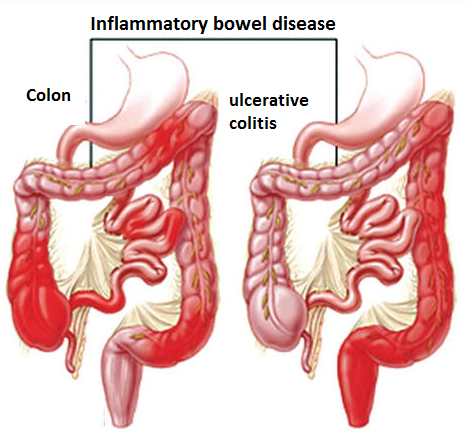
Ulcerative colitis is the long-lasting inflammation of the large intestines resulting in ulcers. In this disease there is an inflammation in the innermost lining of the colon, rectum and ulcers are continuous there is no healthy area in between. In this condition, symptoms develop gradually over time.

ulcerative colitis

Its Signs and Symptoms are:

  • Loose stools with pus or blood
  • Mucous in stool
  • Pain and cramps in abdomen
  • Bleeding from rectum
  • Urgency to pass stool
  • Weight loss
  • Fever
  • Fatigue and weakness
  • Retarded growth in children

CROHN'S DISEASE

Crohn's disease is a form of IBD in which inflammation and ulcers occur anywhere across the digestive tract, from mouth to anus. In this inflammation is not continuous, there are some healthy areas between the inflamed patches and ulcers and gives the appearance of cobblestone.

crohn's disease

Its Signs and Symptoms are:

  • Diarrhea
  • Fatigue
  • Weakness
  • Fever
  • Pain and cramps in abdomen
  • Blood in stool
  • Sores in mouth
  • Decreased appetite
  • Weight loss
  • Anal fissure or fistula causing pain

AYURVEDIC TREATMENT FOR ULCERATIVE COLITIS AND CROHN'S DISEASE

Ayurveda can help in IBD, i.e. Ulcerative colitis and Crohn's disease naturally. There are specific herbal remedies by Planet Ayurveda which are prepared from natural sources under strict Ayurvedic principles to treat Ulcerative colitis and Crohn's disease. All of these remedies consist of herbs which have specific therapeutic action on the cause and pathology of the disease.

Ulcerative Colitis Care Pack

Ulcerative Colitis Care Pack

1. Pitta Balance

As according to Ayurveda IBD is caused due to vitiation and aggravation of the Pitta dosha in the body resulting in chronic inflammation and ulcer formation in the gut. Hence to balance the Pitta dosha, Pitta balance capsules are prepared which consist of natural, cooling and healing substances like Coral, Agate, Jawar pishti, kamdhudha ras, Giloy, and Pearl. These all are naturally cooling and healing substances which cool down the internal heating, soothes the inflammation and heals the ulcers.

Dosage- Take 1 capsule twice daily after meals with plain water.

2. Vatsakadi Churna

This is an Ayurvedic formulation of various herbs like Holarrhena antidysentrica, Aegle marmelos, Foeniculum vulgare, and Coriandrum sativum. It improves the functioning of the digestive system and helps to heal ulcers and inflammation. Herbs used in this herbal churna are digestive, carminative, astringent, anti-dyspeptic, anthelmintic and liver stimulant.

Dosage- Take 1 teaspoon twice daily after meals with plain water.

3. Arjuna Capsules

Standardized extract of Arjuna bark is used to prepare these herbal capsules which is full of medicinal properties and help to treat IBD. It especially helps in controlling and checking the bleeding from the ulcers and fissures. Arjuna capsules have natural healing properties that heal the ulcers in Ulcerative colitis and Crohn's disease. It has anti-inflammatory, analgesic and astringent properties.

Dosage- Take 2 capsules twice daily after meals with plain water.

4. Kutajghan Vati

Kutaja (Holarrhena antidysenterica) is the herb of which standardized extract is used to prepare herbal tablets called Kutazghan vati. It helps to control diarrhea and maintains the proper functioning of the digestive tract. Kutazghan Vati also helps to eliminate the ama from the body and checks inflammation, bleeding and abdominal pain.

Dosage- Take 2 tablets twice daily after meals with plain water.

IRRITABLE BOWEL SYNDROME (IBS)

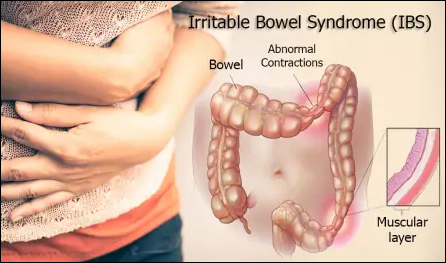
It is one of the most common bowel problems that affects the population worldwide. In IBS there is the over-reactive and hypersensitive reaction of the intestines to mild stimulation. There are no pathological findings or structural changes to be found in any of the laboratory tests. Only the ruling out of other similar conditions can prove to be suggestive of IBS. It can be of three types, IBS with constipation, diarrhea or mixed (alternating both).

Irritable bowel syndrome

It's Signs and Symptoms are:

  • Diarrhea
  • Constipation
  • Diarrhea alternating with constipation
  • Episodes of abdominal pain
  • Bloating or too much gas
  • Stools are harder or looser than normal
  • Mucus in stool

AYURVEDIC TREATMENT FOR IBS

Ayurveda helps to treat Irritable bowel syndrome naturally. There is a combination of herbal remedies which treats the causes, signs, and symptoms of the disease in a very natural way. These herbal remedies are prepared from pure and authentic herbs which specifically target on the pathology of the IBS and hence treats it naturally.

IBS Care Pack

1. Digestion Support

Standardized extracts of various amazing herbs are used to prepare these capsules. These herbs are Emblica officinalis, Terminalia chebula, Terminalia bellerica, Foeniculum vulgare, Coriandrum sativum, Piper longum, and Cyminum cuminum. All these herbs help to maintain the normal digestion naturally due to the presence of therapeutic properties like stomachic, antiemetic, carminative and anti-inflammatory.

Dosage- Take 2 capsules twice daily after meals with plain water.

2. Kutajghan Vati

These herbal tablets are prepared from pure extract of Kutaja (Holarrhena antidysenterica). It prevents and treats diarrhea and maintains normal digestion. It also helps to pacify Vata, Pitta and Kapha Dosha. Kutazghan vati reduces the inflammation and helps in restoring the normal digestion

Dosage- Take 2 tablets twice daily after meals with plain water.

3. Pitta Balance

Vitiation of Pitta dosha is the main reason for the development of any type of digestive disease. Hence to treat IBS it is necessary to pacify the Pitta dosha so that the cause is treated. Pitta balance capsules are prepared from Coral calcium, Agate calcium, Jawar Mohra psishti, Kamdudha ras, Giloy stava, and Mukta pishti. These all are naturally cooling compounds which pacify the pitta and relieve the symptoms of irritable bowel syndrome.

Dosage- Take 1 capsule twice daily after meals with plain water.

4. Sanjivani Vati

It is a digestive stimulant, anti-inflammatory and carminative herbal tablet which helps to treat IBS naturally. Herbs used in these tablets are potentially digestive and cooling like Embelia ribes, Piper longum, Zingiber officinale, Emblica officinale, Acorus calamus etc. It contains all the medicinal properties that are required to treat the signs and symptoms of this disease.

Dosage- Take 2 tablets twice daily after meals with plain water.

Dr Vikram Chauhan, Guide, Ayurvedic Treatment, Ulcerative Colitis, IBD, Inflammatory bowel disease, eBook

Tuesday, June 5, 2018

Top 4 Ayurvedic Medicines for Permanent Cure of Ulcerative Colitis

ulcerative colitis

Ulcerative colitis is a type of inflammatory bowel disease that is responsible to rupture large intestine or colon. This disease causes severe irritation and inflammation. According to Ayurveda panchtatva (five elements- air, water, fire, ether and earth) and tridosha (three energies- vata, pitta and kapha) are the major components of human body. Equal balance of all three energies are responsible for good health and imbalance of above three energies leads to cause various disorders. In the same way aggravation of pitta dosha in body, is responsible for causing ulcerative colitis.

In Ayurveda, Ulcerative colitis is mentioned as pittaj garahani. From ayurvedic point of view, excess intake of pitta aggravating food results in the formation of poisonous sticky material called AMA in digestive system. This material further clings to the walls of intestine and causes ulcerative colitis. To get rid of this serious illness one should avoid dairy products and foods that are responsible to accumulate extra pitta dosha in body.

AYURVEDIC MEDICINES FOR ULCERATIVE COLITIS

Planet Ayurveda provides you the best ayurvedic medicines for ulcerative colitis in the form of Ulcerative Colitis Care Pack. Supreme quality of herbs are used to prepare this miraculous pack. Arjuna capsules, Pitta balance, Kutajghan vati and Vataskadi churna are four top ayurvedic medicines for ulcerative colitis available at house of Planet Ayurveda.

1. Arjuna Capsules

Standardized extract of bark of arjuna tree is used to prepare this formulation. Tree bark of this plant is famous for wound healing and protecting cardio vascular system. Harmful substances and free radicals are responsible for the rupture of endothelial layers of arteries. This herb is used to protect blood arteries from these toxins. It also works wonderfully on the internal lining of intestine and helps to heal intestinal wounds and ulcers. This herb is also effective for cardiovascular system and very effective in the patients that are suffering with excessive blood loss in ulcerative colitis. To improve overall strength and haemoglobin levels in body this herb is very powerful. Arjuna capsules is good anti-inflammatory, analgesic and anti-oxidant in nature. Herb used to prepare this powerful supplement are richest source of calcium, copper, zinc and magnesium.

Dosage – 2 capsules twice daily after meals with normal water.

2. Vataskadi Churna

Vataskadi churna is second herbal remedy for the treatment of ulcerative colitis. This herbal and natural blend is a powerful mixture of ayurvedic herbs that are mentioned below-

  • Kutaz - Kutaja (Holarrhena antidysentrica) is wonderful ayurvedic herb that helps to pacify pitta and kapha doshas. Basically in Ayurveda this herb is used to treat diarrhoea and irritable bowel disorder. Bark, seed, fruit and flowers of this herb are well known for its medicinal properties. But bark of this herb is antihelmintic, amoebicidal and astringent in nature. It is used to treat dysentery and other gastric disorders.
  • Bilva - Bilva is second herb used to prepare this formulation. In Ayurveda, this herb is mentioned under the category shothhara herbs used to relieve excessive inflammation. In the same way it used to reduce inflammation of intestine in case of ulcerative colitis. Also used to relieve diarrhoea, dysentery, vomiting and excessive thirst. Bilva is that herb which is used to regulate proper body energies.
  • Saunf - Saunf is richest source of iron and very helpful to regulate normal haemoglobin levels. In Ayurveda, this herb is used to improve strength and immunity, ayurvedic term used to recognize these properties are BALYA. It is used to relieve burning sensation. Fruits, fruit oil and roots are major parts of this herb is used in various ayurvedic supplements.
  • Dhania - Coriander seeds and leaves are used in Indian cuisines though this herb is also well known for its therapeutic and medicinal properties. It is categorized under sheetprashmana and trushnaprashmana gana it means this herb is used to relieve burning sensation and excessive thirst. It also used to cure pain and cramps. It is very effective in ulcerative colitis sufferers.
  • Nagarmotha - Cyprus rotundus” is botanical name of nagarmotha. This plant contains numerous chemical compounds and well known for its therapeutic effects. This effective herb is used to maintain good health of digestive system.
  • Anar - Pomegranate (Punica granatum) is very nutritious fruit. All the parts of this tree like fruit, bark, fruit rind and roots have medicinal properties. It helps to gain the lost blood levels and sweet fruit helps to maintain the balance between all three doshas- vata, pitta and kapha. This herb is also balya in nature provides body strength.
  • Chotti Ealachi - “Elettaria cardamomum” is latin name of this herb. It is called king of spices. This herb is used as laxative and used to relieve severe pain in stomach and good for digestive system. In ulcerative colitis patients this herb helps to reduce inflammation and to prevent diarrhoea.   
  • Jaiphala - Nutmeg is a very good aphrodisiac herb and used as a good digestive tonic. Very effective herb used to relieve diarrhoea with bloating and helps to reduce severe abdominal pain.

All the above mentioned herbs are used to prepare this effective herbal remedy for ulcerative colitis.

Dosage - 1 teaspoon twice daily with normal plain water after meals and you can also boil teaspoon of churna in 400ml of water, boil it until it remains 50ml. Strain and drink the water after leaving residue. You can take it twice a day and make it fresh.

3. Pitta Balance Capsules

Pitta balance is herbal formulation of mukta pishti, jahar mohra pishti, kamadhenu rasa, praval pishti, akik pishti and giloy satva. Compounds used in this herbal formualation are rich is calcium. Presence of these rich calcium compounds Calcium control the internal bleeding in ulcerative colitis and cooling properties helps to sooth the internal lining of intestine. It maintains balance between all three doshas and mainly it helps to pacify extra aggregated pitta dosha in patient. Pitta balance is herbal remedy that helps to improve digestive fire and strengthen the intestine.

Dosage - 2 capsules twice daily with normal plain water.

4. Kutazghana Vati

Kutaja (Holarrhena dysentrica) is the herb used in the preparation of this herbal remedy for ulcerative colitis. This herb is well known for treating diarrhoea and irritable bowel syndrome. It supports digestive system and very effective to maintain good health of intestine. In Ayurveda this herb is called shelshapittahara – herb used to pacify both kapha and pitta dosha. This herb is effective to light up digestive fire and used to relieve bleeding disorders.

Dosage - 2 tablet twice daily with normal plain water.

Ulcerative Colitis Care Pack

Ulcerative Colitis Care Pack

Above mentions supplements are top four herbal remedies for ulcerative colitis. These herbal formulations are free from chemicals, any type of fillers and preservatives. Herbs used in above mentioned formulations are natural and pure. These all herbs makes a proper balance between all three doshas of body and promotes good digestive health.

Dr Vikram Chauhan, Guide, Ayurvedic Treatment, Ulcerative Colitis, IBD, Inflammatory bowel disease, eBook