Search This Blog

Dr. Vikram Chauhan - MD (Ayurveda)

Showing posts with label Uses. Show all posts

Thursday, June 12, 2025

Shwas Kuthar Ras - Medical Properties, Indications, Dosage & More

Reference

Ayurved Sar Sangreh/ Ras- rasayan prakaran /Page-457

Abstract

Shwas Kuthar Ras is a time-honoured herbo-mineral formulation in Ayurveda, renowned for its efficacy in managing respiratory disorders such as asthma, bronchitis, and chronic cough. In the current era, where environmental pollutants and lifestyle factors contribute to respiratory ailments, this formulation offers a holistic approach to respiratory health. It acts by balancing the Vata and Kapha doshas, and addresses the root causes of respiratory issues, providing relief from symptoms and enhancing overall pulmonary function.

Introduction

Shwas Kuthar Ras is derived from the words "Shwas" (breath) and "Kuthar" (axe). Shwas Kuthar Ras metaphorically acts as an 'axe' cutting through breathing difficulties. This classical Ayurvedic medicine is formulated to alleviate various respiratory conditions by targeting the underlying doshic imbalances. Its composition includes potent herbs and minerals that synergistically work to clear respiratory channels, reduce inflammation, and strengthen the respiratory system.

Classical Indications

Shwasa (Dyspnea)

Ingredients

  • Maricha Churna (Powder of Piper nigrum) - 2 part
  • Shuddha Parada (Purified Mercury) - 1 part
  • Shuddha Sulphur (Purified Sulphur) - 1 part
  • Shuddha Vatsanabha (Purified Aconitum ferox) - 1 part
  • Shuddha Tankan (Purified Borax) - 1 part
  • Shuddha Manahshila (Purified Realgar) - 1 part
  • Shunthi Churna (Powder of Zingiber officinale) - 1 part
  • Pippali Churna (Powder of Piper longum) – 1 part

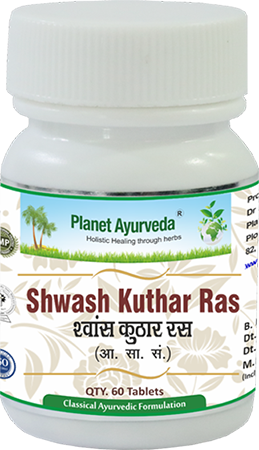
Shwash Kuthar Ras by Planet Ayurveda

INGREDIENTS DESCRIPTION

1. Shuddha Parada (Purified Mercury)

It possesses Madhura (sweet) vipaka and Ushna Veerya (hot potency). It is known for its Yogavahi (catalytic) and Rasayana (rejuvenating) properties, i.e., it enhances the efficacy of all ingredients. It pacifies Vata and Kapha and helps manage chronic respiratory disorders.

2. Shuddha Gandhaka (Purified Sulphur)

It has Tikta (bitter), Kashaya (astringent) rasa, and Ushna Veerya (hot potency); it pacifies Kapha and Vata. It promotes skin health, supports digestion, and helps clear respiratory tract obstructions in respiratory infections.

3. Shuddha Vatsanabha (Purified Aconitum ferox)

It has Tikta-Katu (bitter-pungent) rasa and Ushna Veerya (hot potency). It pacifies Vata and Kapha and is known for its deepan (digestive) and shwasahara (anti-asthmatic) effects. It is used carefully for respiratory distress and fever-related conditions.

4. Shuddha Tankana (Purified Borax)

It has Tikta-Katu rasa (bitter-pungent taste) and Ushna Veerya (hot potency); it pacifies Kapha and Vata dosha. It has lekhana (scraping) and mucolytic properties, which are useful in asthma, productive cough, and throat congestion.

5. Shuddha Manahshila (Purified Realgar)

It possesses Tikta-Kashaya rasa (bitter-astringent taste) and Ushna Veerya (hot potency), pacifying Kapha and Vata. It helps reduce inflammation and remove toxins from the lungs, providing relief in chronic respiratory issues like bronchitis.

6. Shunthi (Zingiber officinale – Dry Ginger)

It has Katu rasa and Ushna Veerya (hot potency), pacifying Vata and Kapha. It is deepana-pachana (digestive and carminative) and effective in managing nausea, cough, and digestive upsets.

7. Pippali (Piper longum – Long Pepper)

With Katu rasa (pungent taste) and Anushna-Sheeta Veerya (neither hot nor cold potency), it balances all three doshas. Acts as a bioenhancer and expectorant, supporting digestion, immunity, and respiratory ease.

8. Maricha (Piper nigrum – Black Pepper)

It has Katu rasa (pungent taste) and Ushna Veerya (hot potency), pacifying Kapha and Vata. It is known for its deepana and pachana (Digestive and carminative), and Kaphaghna action; it clears phlegm and improves appetite in conditions involving cold and cough.

Method of Preparation

The preparation involves triturating purified mercury and sulphur to form a black sulphide of mercury (Kajjali). Subsequently, the fine powders of the remaining ingredients are added, and the mixture is thoroughly blended. The resultant mass is then rolled into tablets of 1-1 ratti each (125 mg) and dried in the shade to preserve potency.

Dosha Impact

Balances Vata and Kapha doshas.

Medicinal Properties

  • In Tamaka Shwasa (Bronchial Asthma), use with Sitopaladi Churna and honey + ginger juice to relieve bronchospasm.
  • In Kaphaja Kasa (cough with expectorant), combine with Talisadi Churna and honey to reduce a productive cough.
  • In Hikka (Hiccups), use with Lavangadi Vati and warm water or ginger decoction to calm spasms.
  • In Krimi-janya Shwasa (Dyspnea due to Microbial respiratory infections), combine with Vidanga Churna (Powder of Embelia ribes) and honey + lukewarm water for deworming and kapha-vata balance.
  • In Chronic Rhinitis (Peenasa), use with Trikatu Churna and ginger decoction to decongest the sinuses.
  • In Urdhwaga Amlapitta (Reflux disorders), give with Avipattikar Churna and warm water to manage reflux and vata-kapha.
  • In Sannipataja Jwara with Ama (chronic fevers), combine with Trikatu and Godanti Bhasma, with tulsi-ginger decoction to reduce fever and breathlessness.
  • This is used in episodes of hysteria/migraine/epilepsy/unconsciousness conditions for bringing back to consciousness as a nasal administration of its powder.

Indications

  • Asthma, breathlessness (Shwasa)
  • Kasa (Cough)
  • Chronic rhinitis (Peenasa)
  • Kapha-Vata predominant disorders
  • Bronchitis
  • Dyspnea
  • Anorexia

Dosage

125 – 250 mg once or twice daily, preferably before or after meals, as directed by an Ayurvedic physician. Usually advised to be administered with honey or warm water to enhance absorption and efficacy.

Contraindications

  • Not recommended during pregnancy and lactation.
  • In cases with heart disease-related dyspnea.
  • It should be avoided in individuals with cardiac disorders.
  • Its overdose may lead to toxic effects; hence, strict medical supervision is advised.

Why Choose Planet Ayurveda's Shwas Kuthar Ras

  • Formulated under the guidance of expert Ayurvedic physicians, adhering to classical texts.
  • Manufactured using high-quality, purified ingredients, ensuring safety and efficacy.
  • Free from chemicals, preservatives, and artificial additives.
  • Supports respiratory health by balancing Vata and Kapha doshas.
  • 100% natural and vegetarian formulation.

Conclusion

Shwas Kuthar Ras stands as a testament to the profound wisdom of Ayurveda in managing respiratory ailments. Thus, by harmonising the Vata and Kapha doshas, it addresses the root causes of respiratory disorders, offering relief from symptoms like cough, breathlessness, and indigestion. Its holistic approach not only alleviates symptoms but also fortifies the respiratory system, enhancing overall well-being. This formulation, when prepared and administered under expert supervision, as exemplified by Planet Ayurveda, Shwas Kuthar Ras serves as a potent ally in the journey towards respiratory health.

Monday, March 31, 2025

Sanshamani Vati - An Ayurvedic Immunity Boosting Supplement & Other Benefits

ABSTRACT

Nowadays as the whole world is dealing with the ongoing pandemic condition it is very important for everyone to raise their immunity power (disease fighting capacity). As we all know that ayurveda has shown great results in people suffering from covid-19 whether it’s our kwath formulations (herbal solution) or even golden milk everything plays a major role in raising the immunity power. One such very effective herbal formulation is “samshamni vati”. So let’s discuss the health benefits of it in our body.

Let’s Firstly Discuss About Role Of Oja (Immunity)

It is a very good herbal formulation that works as best antipyretics (helps in relieving fever) herb and known for its sansham property (balances the vitiated dosha within the body by using medication by oral route) so known as “Sanshamani Vati”

  • Immunity – means the self resistance power of our body to fight with the infection or any harmful pathogen that has been entered in our body.
  • In Ayurveda we correlate this with “VYADHI KSHMATAV” (disease fighting power. “Oja” (immunity power) is considered to be the main reason to provide this vyadhi kshmatav to the body.

As per ayurveda 0ja (immunity power) is defined as-

  • It is a red or yellow color fluid in appearance present inside our heart, when there is loss of this substance in our body then the functioning of our body also gets disturbed & will ultimately lead to the mere death of a person.
  • Ingredients of SANSHAMANI VATI: It includes the standardized extract of guduchi.

General Description Of Guduchi

It is a long herb (creeper) climb over the trees for support. Its stem is covered with a slimy layer and can be peeled off very easily. It has the characteristic appearance of chakra (round) over its internal surface. It is found all over India mainly in the area of northern and eastern parts of the country.

  • Hindi Name: Giloy
  • Latin Name: Tinospora cordifolia
  • Sanskrit Names:
    • Guduchi (one which protect our body from ailments)
    • Amruta (works like amrit [holy fluid] for us)
    • Chakra Lakshanika (appearance of peculiar circular shapes over its internal structure)
    • Javarnashi (aid in fever)

It is considered as a best immunity boosting herb as it posses various herbal properties such as:

  • Vaya Sthapana - Means age sustaining herb, helps in attaining good health for a longer duration.
  • Daha Parashaman - Means help in reducing daha (burning sensation). As it has tikta (bitter) and kashay (astringent) taste it helps in reducing pitta dosha value, the main root cause of burning sensation.
  • Trushna Nigrhan - Works as a good anti dypsic herb assist in relieving the polydipsia (excessive thirst) problem.
  • Stanya Shodhan - Means galacto-depurant herb, as it helps in clearing out impurities from the breast milk in lactating mothers.
  • Trupti Ghana- Anti-saturative herb helps in providing a feeling of trupti (satisfaction) to our body.

Medicinal Properties Of Guduchi

  • It is a tridosha shamak (aid in balancing all the three main energies of our body i.e, vata, pitta and kapha) and pittasarak in action (releases the pitta dosha related impurities outside from the body).
  • Contains natural antiseptic and analgesics properties so assist very efficiently in healing the wound.
  • It is a very good cardiotonic herb so assist in managing various cardiovascular systems related ailments very efficiently.
  • Known worldwide for its good restorative characteristic and have balya (increase strength of our body) and rasayana property (rejuvenating herb).

Uses Of Sanshamani Vati

Along with great immunity boosting property it also possesses other herbal uses, they are as follow:

  • Useful in thirst, vomiting, abdominal pain and loss of appetite like illnesses.
  • It works really well in various types of javar (fevers) due to the presence of ‘pitta sarak’ property which releases out vitiated pitta dosha from the body. List of some fever are as follow:
    • Visham javar (malaria)
    • Manthar javar (typhoid)
    • Dandak javar (dengue fever)
    • Shavasanak javar (pneumonia)
    • Shaleshmik javar (influenza)
    • Sandhik javar (rheumatic fever)
    • Tivratam javar (hyperpyrexia)
    • Sheet purvak javar (fever with chills)
    • Karan mulik javar (mumps)

Due to the presence of anti-inflammatory action, uses in various disorders such as:

  • Rheumatoid Arthritis - as in this there is formation of inflammatory response in the body due to the presence of ‘ama’ (undigested food) in the synovial fluid of the joints.
  • Osteoarthritis - the word ‘itis’ means inflammation and osteoarthritis means formation of inflammatory response in the large joints of your body.

As a result of ‘madhur vipak’ and tikta (bitter) rasa (taste) it helps in normalizing pitta dosha values so aid in anaemia (pandu as per ayurveda) as it is considered as a pittaj vyadhi.

Contain hypoglycemic property so used preferably in patients of diabetes mellitus as it helps in reducing the increased blood glucose level within the body.

Method To Prepare Sanshamani Vati

Collect fresh guduchi plants and then make a coarse powder of it by crushing it properly. Then add them into water and boil it until its quantity reduces to half. Filter it with the help of a strainer and leave the residue. Let it get cool for some time and then make proper pills in the form of tablets from this.

Sanshamani Vati, Ayurveda, Ayurvedic, dosage, Health benefits, Indications, Medicinal Properties, Uses, Method To Prepare Sanshamani Vati

Dosage: 250 to 500 mg twice daily with lukewarm water after meals.

CONCLUSION

Now we can conclude that in the present era of pandemic it is very important for each and every individual to have good immunity power. Sanshamani vati is a very good herbal formulation to achieve this goal. In case it is not available, you can buy a giloy capsule and giloy satva of planet ayurveda. They work as a very good substitute for this. You can buy them from planet ayurveda online store or can also consult expert doctors of Planet Ayurveda.

Friday, February 21, 2025

Garcinia - Health Benefits, Classification, Vernacular Names, Dosage & Ayurvedic Properties

ABSTRACT

Garcinia is a tropical plant and is native to India and Southeast Asia. It comprises more than 200 species that can be found throughout the world. One of the most common and known is Garcinia Cambogia, i.e. commonly named as malabar tamarind, and it possesses many therapeutic properties. This can be sold as a dietary supplement and is available in the form of powder or pills.

Garcinia, Classification, Vernacular names, Synonyms, Ayurvedic properties, Chemical composition, Benefits, Uses, Part used, Ayurvedic product, Planet Ayurveda product

DESCRIPTION

Garcinia is a group of tropical trees and shrubs native to Asia and Africa. Its most well-known species is "Garcinia cambogia," which produces a small pumpkin-shaped fruit with a sour rind. The rind contains hydroxycitric acid (HCA), a chemical that has been studied for its appetite-regulating properties. This dietary supplement is marketed specifically to help people lose weight. Because of its tart flavour, the fruit is used as a condiment and food preservative in Asian cuisine.

CLASSIFICATION

  • Latin Name: Garcinia cambogia
  • Kingdom: Plantae
  • Order: Malpighiales
  • Family: Clusiaceae
  • Genus: Garcinia

OTHER VERNACULAR NAMES

  • Sanskrit Name: Vrikshamla, Samagnicha
  • Hindi Name: Kokum, Amlaveta, Vishambila
  • English Name: Kokum butter tree, Red mango, Mangosteen oil tree
  • Bengali: Mahada
  • Malayalam: Punampuli
  • Tamil: Murgal, puli
  • Kashmiri Name: Titidika
  • Gujarti Name: Kokam, Birandel

SYNONYMS

Common Name Scientific Name/Species
Kokum Garcinia indica
Malabar tamarind Garcinia gummi-gutta
Mangosteen Garcinia mangostana
Yellow mangosteen Garcinia xanthochymus

HABITAT

The habitat of the Garcinia cambogia tree grows in tropical and subtropical regions with humid climates. Garcinia cambogia is native to the Western Ghats region of India. They are found in the evergreen forests of north-eastern India and Southeast Asia. These grow best in moist, fertile, well-drained soil with a slightly acidic to neutral pH. A fertile loam soil type is preferred that provides nutrients and allows excess water to drain. These can be grown in shade or no shade. The cambogia species can be grown in flooded or water-clogged soil.

MORPHOLOGY

  • Garcinia cambogia is a medium-sized, evergreen tropical tree or shrub with distinctive leaves, flowers and fruits.
  • The leaves are dark green, shiny and oppositely arranged. The leaves are elliptic, oblongolate.
  • The flowers are polygamous, with cream sepals and pink petals that are borne in axillary or terminal clusters.
  • The colour of the petals is red or sometimes yellow.
  • The plant is dioecious, with male and female flowers borne separately on different plants.
  • The fruit is so sour and is generally not eaten raw. But the dried rinds of fruit are used in food preparation.

AYURVEDIC PROPERTIES

  • Rasa (taste): Amla (sour), and Madhura (sweet).
  • Guna (Physical Properties): Rooksha (Dryness), guru (Heavy to digest)
  • Vipaka (Post digestion effect): Amla (Sour)
  • Veerya (Potency): Ushna (Hot)

CHEMICAL COMPOSITION

Garcinia cambogia contains organic acids, amino acids, benzophenones and xanthones. The primary chemical component of Garcinia is hydroxycitric acid. This is the main ingredient, and it is thought to be responsible for the weight loss and anti-inflammatory effects.

Leaves: Garcinia contains L-leucine, which may help maintain muscle bulk while encouraging weight loss by reducing the muscle damage that occurs during a calorie-restricting diet. All of this is due to the presence of the amino acid leucine, which promotes protein synthesis and muscle development.

Fruit: Garcinol, isogarcinol, and comboginol. These bioactive compounds are found in the fruit and are primarily recognized for their antioxidant and anti-cancer properties. They have the ability to inhibit cell proliferation and induce apoptosis.

Rind: Hydroxycitric acid. This is found in the fruit's thick outer layer. HCA is an active ingredient that has been researched for its impact on appetite and obesity. This is commonly available in markets as an appetite suppressant. This essentially prevents the conversion of citric acid to acetyl-CoA, the first step in the fatty acid synthesis.

Seeds: Neutral lipids and glycolipids. Because of their high triglyceride content, neutral lipids are primarily used for energy storage, whereas glycolipids are important for cell membrane stability and recognition.

PRACTICAL USES/BENEFITS

1. Promoting Weight Loss

Garcinia cambogia plays an important role in weight loss. It has been widely used as an anti-obesity or as a weight loss supplement since ages. This amazing benefit is due to the presence of an active compound, hydroxycitric acid. This prevents the fatty acid synthesis by blocking the synthesis of enzymes. Numerous studies have shown that HCA can reduce body weight gain, cholesterol, and triglycerides. Garcinia is also available in the market as capsules and powder. So, for those looking to lose weight, this could be the best supplement for them. Garcinia cambogia promotes fat oxidation (the breakdown of fat into energy). As a result, this may help to increase fat burning efficiency, but only when combined with regular exercise. This may reduce fat accumulation in the body, particularly around the stomach area. This can be extremely useful for preventing fat storage after meals, particularly those high in carbohydrates.

2. Cholesterol Levels Improvement

Many studies found that garcinia cambogia helps improve lipid profiles by reducing bad LDL cholesterol and increase good HDL cholesterol. This can potentially lower the levels by inhibiting an enzyme called citrate lyase. Overall, this can be beneficial for cardiovascular health, and many people can be free from heart diseases.

3. Maintains Blood Sugar Levels

Improving insulin sensitivity refers to how efficiently the body's cells respond to insulin. When it is improved, the body can process glucose from the blood into cells for energy while also preventing hyperglycemia. Diabetics can use this to help control or manage their blood sugar levels. Also, restricting or reducing hunger and food cravings might indirectly contribute to more stable blood sugar levels. overeating or consuming foods that are high in sugar and refined carbs can spike the blood sugar. It is preferable to incorporate a healthy diet alongside herbal supplements.

4. Anti-Inflammatory

Garcinia cambogia has anti-inflammatory properties due to the presence of active components. For example, this may help modulate the production of pro-inflammatory cytokines, which are proteins that cause inflammation. This works by inhibiting specific inflammatory pathways in the body and also helps to reduce overall inflammation, which may benefit conditions such as arthritis or disorders.

Parts Used

Fruit, seed, tender leaves.

Ayurvedic Product Of Planet Ayurveda

Garcinia, Classification, Vernacular names, Synonyms, Ayurvedic properties, Chemical composition, Benefits, Uses, Part used, Ayurvedic product, Planet Ayurveda product, Garcinia Capsules

Planet Ayurveda Garcinia Capsules

Planet Ayurveda Garcinia capsules are made with the standardised fruit extract of the plant Garcinia cambogia. In Ayurveda, it is termed Vrikshamla, which balances kapha and vata doshas. It has three tastes—sour, pungent, and astringent—that support protein metabolism. These capsules are specially designed to reduce the excess fat from the belly area. And it works wonderfully with dietary precautions.

Dosage: Take 1-2 capsules twice daily with plain water after meals.

Conclusion

Garcinia is found in tropical areas and in suitable habitats. The fruit contains many bioactive compounds and plays a vital role towards health. Garcinia cambogia comprises several health benefits, as discussed above in the article. This is the best weight loss supplement if taken by obese people. As per the ayurvedic perspective, any herbal formulation only works well for the body if you resist eating habits and modify your lifestyle and dietary conditions. Garcinia can be consumed in the form of capsules or powder as well.

Thursday, May 23, 2024

Ginger / Zingiber officinale - Nutritive Content, Uses & Health Benefits

Abstract

One of the oldest spices, with a distinctive invigorating aroma and juicy flavor. India has the highest production of ginger. According to data for 2022, Madhya Pradesh, India, is the largest producer of ginger. Following this, the important growing states are Karnataka, Assam, and Himachal Pradesh. Other ginger-producing countries include Brazil, China, Japan, and the West Indies. Because of its main bioactive compound, GINGEROL, it has numerous taste-enhancing properties. And this is the primary seasoning ingredient for spice material in a typical daily diet. Ginger has traditionally been used as a medicine. Ginger paste, also known as liquid ginger, is commonly used to flavour foods. Cold drinks, soft drinks, alcohol, and some Ayurvedic syrups are also examples of beverages that contain it. Fresh and dried ginger have different applications. Fresh ginger can be used to make tea or "Kadhas" during the winter. Some housewives prepare or preserve raw ginger as ground powder for future use. It is known as "Sonth powder" in Hindi. This also functions as a medicinal spice.

Introduction

Ginger is from the Zingiberaceae family, which originated in Southeast Asia. This is one of the most important spices in India. This is obtained from underground stems known as rhizomes. It has a stem that is approximately 12 inches long, narrow, and ribbed, with green leaves and yellowish green flowers. Ginger varieties vary in size, fiber, rhizome moisture content, and yield. Ginger thrives in a warm, humid climate. It needs moderate rainfall from spreading to germination.

Ginger, Zingiber officinale, Nutritive Content of Ginger, Health Benefits of Ginger, Uses, Taste of ginger, Properties Of Ginger

Taste Of Ginger

Its powerful, exotic roots enhance the flavour of the fruit. It has a mildly spicy or peppery flavour and a refreshing aroma. Ginger tastes spicy because of the chemical constituents present- gingerol. This is a specific compound that creates a hot sensation. If we talk about the young ginger, it is very juicy and has a melodious kind of flavour. It is said that the growing conditions of ginger can also affect the odour, taste, and flavour; sometimes it is more bitter than others.

Nutritive Content Of Ginger

Ginger is basically known for being the best antioxidant. It generally does not have any protein or crude fibre content. Vitamin C and Beta- carotene are the main sources. At a certain percentage, it consist of carbohydrates, ashes, crude protein and crude fibre content, In dried ginger , a slightly higher moisture content was found

Minerals

Zinc, manganese, iron, Cu, Ca, and phosphorus are present in good amounts, as some researchers have researched.

Bioactive Constituents

Ginger is composed of a huge amount of active compounds, such as phenolics - major Gimgerols, shogaols, and parasols. terpene compounds include Zingiberene, bisbolene, farnesene, and curcumene.

Components Including Fresh And Dried Ginger Is Shown In The Table Given Below

Fresh Ginger Dried Ginger
Gingerols are highly active in fresh ginger With heat and dry treatment for lomg time storage, gingerols can be transformed into shagaols
Polyphenols present are- 6- gingerol, 8- gingerol and 10- gingerol And is responsible for the taste and flavour of dried ginger
There are so many benefits to eating fresh ginger:
  • Fight with germs, which support our immune system
  • Good breathing also keeps mouth healthy
  • Ease the pain of periods and arthritis
  • It also lowers blood glucose levels
Dried ginger is taken in liquid form mostly as Kadhas, and it can also be taken in powdered form as Churans due to its antioxidant and healing nature. This helps in;
  • Digestion
  • A healthy respiratory system (cold and cough)
  • Joint health

Properties Of Ginger

Ginger is used as a good antioxidant. Due to its bioactive properties, this helps in the removal of toxins from the body through secretions. It stimulates blood circulation and cleanses the colon from diseases like bowel syndrome and some kidney disorders. Ginger is safe to eat daily at a certain quantity of around 3-5 grams.

1. Common Cold & Cough

The rhinovirus, commonly called the common cold, is a disease that is common in society. Although many people suffer from the common cold,. It keeps our body inactive and slows down the activities of our nervous and respiratory functions. Ginger is served as an active ingredient here. It can be consumed in the form of tea, kadha, or honey and lemon during these conditions. This is the cheapest way to cure the disease at home, rather than consult with a doctor. But if your cold is extending from weeks to months, one must discuss this with the doctor. It helps in producing antibodies and fighting against antigens. And keep your inner body warm during the winter. Everyone is used to drinking ginger tea in the winter.

2. Antimicrobial & Antibacterial Infections

The essential oil compounds present in ginger help fight against microbes and bacteria as well. This herb helps in inhibiting the growth of a multidrug- resistant strain of Pseudomonas aeruginosa through biofilm formation. This helps in making the cell wall as well as the cytoplasmic membrane, which is more permeable and induces the loss of membrane integrity in fungi.

The essential oil present in ginger shows antifungal properties against Aspergillus flavus and restricts the expression of some dominant genes. Fresh ginger was found to inhibit plaque formation in the human respiratory system. This was effective in blocking viral attachment and internalisation. This is how ginger has antibacterial and antifungal properties.

3. The best Antioxidant

The higher antioxidant properties of dried and fresh ginger are due to its bioactive compounds, like shogaols, which occur naturally during the drying process. Studies found that this dried ginger is rich in shogaol as compared to fresh ginger. These bioactive molecules help in managing free radicals( compounds that damage cells when their numbers grow too high).

A recent study proved that sun dried ginger is good to consume and has higher levels of antioxidant compounds.

One can use the ginger powder to make pinni during the winter. This pinni is made with "sonth powder" and fine dry fruits, which keep the body warm and prevent cold and Dry ginger can also be consumed with veggies One can make a paste and pour it into the food while making it. Ginger tea, or ginger water, is best used at home. Soak the ginger in water overnight, and in the morning, boil the water. When it cools down, take it with honey on an empty stomach. This can secrete many toxins from the blood and also help in purification. It is a very useful drink after a workout. It can sweat the body and release sweat from the skin. These are some easy and healthy ways to intake ginger. And serve as good antioxidants.

4. Benefits In Digestion

This spice is a popular home remedy for gastric issues such as constipation, bloating, dyspepsia, gastritis, ulcers, and indigestion. Ginger constituents have been reported to stimulate digestion and nutrient absorption, thereby relieving constipation. Ginger stimulates the activity of digestive enzymes like pancreatic lipase and amylase. Ginger contains terpene compounds such as zingiberene and alpha-curcumene, which have been shown to help with nausea and vomiting, IBS, and fatty liver disease.

Many people dislike eating ginger because of its distinct aroma and pungent odour. This results in an odd and unappealing flavour. Gingerol, a naturally occurring component of ginger root, is beneficial for gastrointestinal disorders. Eating raw ginger improves digestion, reducing the amount of time food spends in your gut and relieving nausea. This can help with constipation or an upset stomach. For a healthy and clean stomach, eat a slice of ginger before each meal.

5. Immune System Booster

A case study demonstrates that ginger can be beneficial for smokers. Cigarette smoke is known to contain toxic and carcinogenic compounds that affect nearly all systems in the body, increasing the risk of mortality from cardiovascular disease and cancer. Many studies have shown that smokers experience a sudden increase in body cells during inflammation, such as neutrophils, lymphocytes, and others.

There are a lot of herbs. Natural foods, nutrients, and supplements can also help boost the immune system. Thus, ginger, as an aqueous extract, can be consumed naturally and counteracts the negative effects of smoking on the immune system and thyroid hormones. Ginger consumption on a daily basis boosts the immune system and fights chronic diseases such as colds.

Ayurveda clearly explains ginger's role as an immune booster. Ginger is known as Aadrak in Sanskrit. Rasayanas are potent Ayurvedic herbs for immunity building that help strengthen and repair all of the body's dhatus. A long inch of sliced ginger with a pinch of salt (rock) before a meal improves taste and appetite, aids in the elimination of antigens from the body, and activates the immune system.

Conclusion

Adrak/Ginger/Zingiber officinale, a popular spiced herb, can be found in almost every kitchen. This herb has many anti-inflammatory, antimicrobial, and antioxidant properties that protect against disease. Its main bioactive constituents made them effective at inhibiting all foreign substances in the body. Ginger can be consumed in a variety of ways, including tea, syrup, and incorporated into food to enhance its flavor. The ultimate ginger paste is both beneficial and easy to consume. Many people refuse to consume it due to its strong aroma. Aside from these applications, ginger is used in therapeutics and the food industry. Tons of ginger are grown in many places, and the rhizome is consumed because of the presence of gingerol. This has numerous effects on smokers as well. These are the main benefits of ginger. Consuming too much ginger can be fatal. This can lead to bleeding, nausea, and stomach upset. Consume 4 grams of ginger per day accordingly. Or it may not be appropriate for some people; that is an exception. Although it is an epic underground stem fruit with quantifiable anti-disease properties.

Thursday, December 28, 2023

Changeri (Oxalis corniculata) - Uses, Benefits, and Dosages

Abstract

Changeri botanical name is Oxalis corniculata with Oxalidaceae family also known as Changeri Kula. Changeri is explained in Shaak Varg of dravyas. As the name suggests changeri means Rochana. It is explained in the old age content of Ayurveda. It has a sour taste and is used in various disorders of the body. Leaf, fruit, or whole fruit of changeri should be used. As it is rich in potassium, oxalic acid, and vitamins B and C it is very effective in liver and stomach problems. The herb is rich in protein, fat, water, iron, calcium, niacin, beta-carotene, and phosphorus. It has major constituents like vitamin C and oxalic acid and other chemical compounds such as phenol, fatty acids, flavonoids, phytosterols, and tannins.

Introduction

Changeri is explained in different parts of Samhita. Changeri is Sour and Astringent in Taste, Light, and Dry in nature, hot in potency, sour in the metabolic property after digestion, balances the vata and kapha dosha, and acts as a Deepaniya and Ruchya in the body. It acts as an appetiser and improves the digestive fire and metabolism of the body. It helps to treat the vata and kapha disorders of the body such as in Grahani, Arsha (Hemorrhoids), and Atisar (Diarrhoea) as leaves are bitter and astringent in taste. The flower has self-pollinating properties which help to grow it fast. It acts as an Analgesic, Anti-inflammatory, Antiulcer, Antifungal, Antimicrobial, Antinociceptive, Anti-cancer, Anti-diabetic, Anticonvulsant, Hypolipidemic, wound healing, Hepatoprotective, Antihelminthic, Febrifuge, Stomachic, Astringent, and Relaxant properties.

Changeri, Oxalis corniculata, Uses, Benefits, Dosages, Synonyms, Ayurvedic Treatment, Herbal Remedies, Ayurvedic Formulation

Geographical Distribution Of Oxalis Corniculata (Changeri)

It is a delicate and slow-growing herb that grows in warm parts and in all temperate and tropical climates and grows up to an elevation of 3000 metres in the northwest Himalayas. It is found in the tropical regions of America, India, China, Taiwan, Pakistan, Afghanistan, and Indonesia, and in India it is mostly present in mountains, rivers, open gardens, roadsides, riversides, wastelands, and grasslands.

Morphology Of Oxalis Corniculata (Changeri)

It forms lata (bael) on the ground and gives rise to a new plant.It contains the creeping perennial herb which contains alternate, trifoliate with long petiole and has yellow flowered. Fruits are in the form of capsules with many black seeds present in it. It contains a yellow flower and the entire plant is edible and rich in vitamin C. Flowering is present from July to December of the month. Changeri plant is branched and fibrous covered with tiny hairs.

How To Identify A Changeri (Oxalis Corniculata)

  • Leaves - Leaves are alternate and trifoliate in nature and it is broadly obcordate (heart-shaped is attached to the stalk at a pointed end), base cuneate (leave base that has a narrow and wedge-shaped with straight sides that taper to the base), and petioles (it is a stalk that attaches a leaf to the stem of the plant) are 1.5 to 3 cm long.
  • Fruit - Fruit is in the form of a capsule which is linear and puberulous outside.
  • Seeds - Seeds are many, minute in size and brown in colour.
  • Flower - The flower is bisexual and contains 10 stamina and it is solitary or in axillary umbels in size. Flowers are usually yellow in colour. Pedicles are 0.5 to 1 cm Peduncles are 4 to 10 cm long, and bracts are 3-4 mm long and have linear-lanceolate.

Different Names Of Oxalis Corniculata (Changeri) According To Languages

  1. Hindi Name - Teen Pattia (As three leaves structure is there)
  2. Tamil Name - Paliakiri
  3. English Name - Indian Sorrel, Yellow Wood sorrel
  4. Bengali Name - Amrul
  5. Arabic Name - Hamdi
  6. Urdu Name - Teen Pattia
  7. Gujarati Name - Ambolee
  8. French Name - Oxalis cornicluee
  9. Telugu Name - Pulichinta
  10. Marathi Name - Ambutee
  11. Kannada Name - Sivargee, Pullamouradi
  12. Spanish Name - Vinagrera, Acederilla
  13. Sweden's Name - Krpoxalis
  14. Portuguese Name - Erva-azedo, Azedinha
  15. Italian Name - Ossalide corniculata
  16. Fiji's Name - Matakonikoni
  17. German Name - Gehornter sauerklee
  18. Nepalese Name - Caremalaa
  19. Chinese Name - Cu-jinag-cao
  20. Brazil Name - Trevo-azedo
  21. Turkish Name - Eksi yonca
  22. Philippines Name - Kanapa, Salamagi

Synonyms Of Oxalis Corniculata (Changeri)

  • Teen Patiya - As three leaves structure is there
  • Amal Patrika - As leaves are sour in taste
  • Dantasatha - It produces a tingling sensation in the teeth
  • Sunishannachada - As leaves resemble the Sunishannaka
  • Lonika

Rasa, Guna, Virya, And Vipaka Of Oxalis Corniculata (Changeri)

  • Rasa (Taste) - Amla (Sour), Ksahaya (Astringent)
  • Guna (Physical property) - Laghu (Light), Rooksha (Dry)
  • Virya (Potency) - Ushna (Hot)
  • Vipaka (Metabolic property after digestion) - Amla (Sour)
  • Prabhava (Effect) - Deepaniya, Ruchya, and Atisarahara
  • Dosha - Vata and Kapha Dosha
  • Other - Analgesic, Anti-inflammatory, Antipyretics, anti-bacterial

Changeri (Oxalis Corniculata) Relation With Doshas

As it is sour and astringent in taste it helps to pacify the vata and kapha dosha of the body.

Mode Of Propagation And How To Cultivate Changeri (Oxalis Corniculata)

Mode of propagation will be through seeds. It can be grown in a shady area and cultivated by seed and roots along with the stem and it can be available throughout the year.

Kingdom Classification Of Oxalis Corniculata (Changeri)

  • Kingdom - Plantae
  • Order - Oxalidales
  • Class - Oxalidaceae
  • Botanical Name - Oxalis corniculata
  • Rank - Kingdom
  • Genus - Oxalis
  • Species - O. corniculata
  • Botanical Name - Oxalis corniculata Linn.
  • Higher Classification - Archaeplastida (Large and diverse group of photosynthetic organisms such as land plants)
  • Eaten by - Silvisaurus (who eats plants)
  • Clade - Diaphoretickes (a large group of eukaryotic organisms that carry photosynthetic)
  • Domain - Eukaryota

Explanation Of Oxalis Corniculata (Changeri) In Different Sthana Of Samhita

  1. In च.सू. २।१९ explained under Pachani and Grahi Peya in Apamarga Tundleya chapter
  2. दधित्थबिल्वचाङ्गेरीतक्रदाडिमसाधिता|
    पाचनी ग्राहिणी, पेया सवाते पाञ्चमूलिकी||

    In Pachani and Grahi Peya, there are Dadhith (Dahi), bilva (Aegle marmelos), changeri (Oxalis corniculata), Takra (Buttermilk), and Dadima (Punica granatum) help to pacify the vata dosha in the body.

  3. In च.सू. २७। ९३ explained under Shaak varga in Annapaanvidhi chapter
  4. दीपनी चोष्णवीर्या च ग्राहिणी कफमारुते ||
    प्रशस्यतेऽम्लचाङ्गेरी ग्रहण्यर्शोहिता च सा ||

    It is Deepaniya, hot potency, pacified kapha, used in grahani, arsha.

  5. In च.वि.८।१४० explained under Amal Skandha in the Rogabhishagjitiya chapter
  6. पत्राणि चाम्रातकाश्मन्तकचाङ्गेरीणां चतुर्विधानां चाम्लिकानां द्वयोश्च
    कोलयोश्चामशुष्कयोर्द्वयोश्चैव शुष्काम्लिकयोर्ग्राम्यारण्ययोः

    Aamrantank, Asmanthak (A type of Kanchnar), four types of Imli, two types of ber (Berries), dry aam, four types of Imli (dry, wet, Gramya, and Jangal)

  7. In च.चि. ३। २६७ explained in Agurvadi taila
  8. च.चि.८।१३१ explained under the diet and drink in diarrhoea and Rajayakshma in Rajayakshma chapter
  9. चाङ्गेर्याश्चुक्रिकायाश्च दुग्धिकायाश्च कारयेत् |
    खडान्दधिसरोपेतान् ससर्पिष्कान्सदाडिमान् ||

    Leaves of changeri, leaves of Imli, leaves of Dhudiya take swaras or kwath all of this and cook with daal and then in Yush add the dahi, ghee, and Dhadim extract and use it as a khand. Its acts are mala Sangrahak.

  10. In च.चि.१४।१२२ explained under shaka paryoga in arsha roga
  11. त्रिवृद्दन्तीपलाशानां चाङ्गेर्याश्चित्रकस्य च |
    यमके भर्जितं दद्याच्छाकं दधिसमन्वितम् ||

    Leaves of white Nisoth, leaves of Danti, leaves of Palash, leaves of changeri, and leaves of chitrak are used in equal amounts, and then an equal part of ghee is in them and fried with them and mixed with curd.

  12. In च.चि.१९।४३ explained under Changeri ghrita in Atisar chapter
  13. चाङ्गेरीकोलदध्यम्लनागरक्षारसंयुतम् |
    घृतमुत्क्वथितं पेयं गुदभ्रंशरुजापहम् ||

    Ghrit, changeri extract, kwath of berries, the water of dahi, Sonth, Yavkshara, and cook it as a Ghritapaka. Stored in a clean and air-tight container and used in rectal prolapse.

Chemical Constituent Of Oxalis Corniculata (Changeri)

  • Citric acid
  • Tartaric acid
  • Isovitexin
  • Malic acid
  • Flavonoids
  • Tannins
  • Vitexin
  • Volatile oils
  • Vitamins - A, C, B9
  • Phenol
  • Phytosterol
  • Calcium, iron, proteins, phosphorus, beta-carotene, water, fat

Parts Used Of Oxalis Corniculata (Changeri)

The fruits, leaves, or whole plant should be used. The dosage is according to the part used.

Dose Of Oxalis Corniculata (Changeri)

  • If juice is used - 10-20 ml
  • If powder is used - 3-6 gm

Nutritional Components Of Oxalis Corniculata (Changeri)

  • Calcium
  • Vitamin c
  • Phosphorus
  • Sodium
  • Potassium
  • Magnesium

The Specific Action Of Changeri (Oxalis Corniculata)

  • Hridya
  • Daha shamaka
  • Arshogna
  • Grahi
  • Deepana
  • Pachana
  • Jwaragna

Benefits Of Oxalis Corniculata (Changeri)

  • Kaphahita - Use in the treatment of kapha disorders
  • Kapha vata Marutghan - Use in vata and kapha disorders
  • Pittakrut - Increase the pitta dosha
  • Agni Deepana - Increase digestive fire (due to deepaniya in nature)
  • Pachana - Helps in digestion
  • Rochana - Stimulate appetite
  • Ushan veerya - Hot in potency
  • Kinchit kashaya - Slightly astringent in taste
  • Balya - Improves muscle strength
  • Varnya - Improves complexion
  • Medhya - Improves intelligence
  • Kanthya - Improves voice

Indication Of Oxalis Corniculata (Changeri)

  1. Mehahara - Treat the urinary tract disorders
  2. Vayasthapana - Prevents ageing
  3. Grahi - Absorbent in nature
  4. Arsha - Helps to treat piles
  5. Grahani - Helps to treat malabsorption syndrome
  6. Atisar Hanti - Helps to treat diarrhoea
  7. Kustha Nashani - In skin disease
  8. Javara - Useful in fever
  9. Amahara - Treats indigestion
  10. Kasahara - Relieves cough
  11. Shwasha - Relieves breathing difficulties
  12. Anulomana - Improve breathing
  13. Hikkanigrahana - Controls hiccups
  14. Kanthya - Relieves sore throat
  15. Chakushya - Treats eye problems
  16. Kricha - Treats painful micturition
  17. Shonitasthapana - Prevents bleeding
  18. Trutahara - Relieves excessive thirst
  19. Dahahara - Relieves burning sensation
  20. Gulmajit - Useful in abdominal tumours
  21. Pandu - Treats anaemia
  22. Raktamandala - Treats ringworm infections
  23. Kamala - Treat jaundice
  24. Krimihara - Relieves intestinal worms

Can Changeri (Oxalis Corniculata) Used As A Food

It can be used as a food the leaves are eaten. The leaves are eaten in the form of salad or in the form of cooked vegetables.

Changeri - In Classical Texts

  1. Kaidev nighantu in aushadhi varga
  2. Nighantu Adarsha in Changeriyadi varga
  3. Shodhal Nighantu in Amradi varga
  4. Bhavprakash Nighantu in Shak varga
  5. Madanpal Nighantu in Shak varga

Changeri Action As Per Classical Texts

  1. In Kaidev Nighantu - Deepan, Kapha Vata Nashak
  2. In Nighantu Adarsha - Kapha Vata Nashak
  3. In Shodhal Nighantu - Deepan and arshogan
  4. In Bhavprakash Nighantu - Deepan, Ruchya, Kapha Vata Nashak, grahni, kushtha, Atisar
  5. In Madan Pal Nighantu - It is deepan, Ruchya, Kapha Vata Nashak

Systemic Action Of Changeri On The Body

  • Scraping effect on Dhatu - So given in eye disease such as inflammatory disease of sclera, Pterygium (Arma)
  • Acts as an anti-inflammatory, analgesic
  • Headache
  • Inflammatory wounds

The Internal Action Of Changeri On The Body

1. On Digestive System

It is Digestive, appetiser and also Given in anorexia, loss of appetite.it can also be used in various diseases such as Grahani, Arsha, Diarrhoea, Rectal prolapse and also in bleeding disorder.

2. On Nervous System

Given in intoxication and helps to regain consciousness.

Acts as anti-poisonous action and used in case of datura poisoning.

4. Tapakarma

It has a cold in touch and is indicated in Chaturthaka Jawara (Quaternary type of fever), and helps to relieve the burning sensation.

5. Skin Disease

As it is rich in antioxidants it helps to eliminate the free radicals from the body and helps in skin diseases like eczema, sunburn, and bioactive compounds prevent worm infestation and also improve the healing process in the body.

6. Piles

It has hemostatic action on the body which helps to treat piles as it proves the cooling and calming effects on the affected area.

7. Insomnia

It reduces the cortisol level in the body which is a stress hormone that helps to improve the quality duration of sleep. Changeri helps to calm the mind and acts on nerve tonic which helps to strengthen the nerve.

8. Diarrhoea

It contains an antimicrobial property that helps to kill microorganisms from the intestine, eliminate toxins from the body, and reduce the frequency of stools.

9. Digestion

It acts as an appetiser. It is a carminative that helps to break down the food particles in the stomach and helps to increase the amount of digestive juice in the stomach, boosting the absorption process of nutrients through the intestines. So it is useful in digestive disorders like flatulence, heartburn, constipation, and diarrhoea.

10. Bad Breath

As leaves are a source of antiseptic and anti-microbial properties it helps to prevent infection as it prevents the growth of microbes. Just chewing some leaves of changeri helps to cure bad breath and also helps in bleeding gums, swelling in the gums, and gingivitis.

11. Anorexia

As it is a natural appetiser and deepaniya properties in it it helps to improve the appetite and increase the digestive fire which helps to improve the metabolism of the body. As the body increases the demand for food it works as a nervous tonic which helps to improve mental health.

Benefits According To Modern

  • Appetising property - It acts as an appetiser and increases the digestive fire that helps to improve the metabolism of the body and leads to the healthy functioning of the body.
  • Anti-fungal property - As changeri contain anti-fungal properties, they help to treat a fungal infection like Aspergillosis, tinea infection.
  • Anti-allergic - As it helps to remove the aam (toxins) from the body which helps to improve metabolism and stimulate the white blood cells that help to treat the allergy.
  • Antiviral - It helps to treat viral infections such as HIV, HPV, and many other.
  • Immunomodulator - As changeri is rich in vitamin C it helps to improve the immune system system of the body so it is given in immunocompromised patients.
  • Acts as a cardiac tonic - As it is rich in vitamin C and potassium.

Indications According To Modern

  • Skin Disease - It helps to treat the viral corns, warts, and boils
  • Eyes Disease - It is helpful in the early stage of cataract
  • Nausea - As it helps to relieve nausea and burping symptoms

Who Cannot Take Changeri?

Oxalic acid is present in the leaves of changeri and has a sharp flavour that helps bind the supply of calcium in the body so the person who suffers from rheumatoid arthritis, gout, and hyperacidity should take precautions while taking this.

Ayurvedic Formulation Of Changeri

  • Changeri ghrita - used in malabsorption syndrome, diarrhea, and bloating
  • Jivantayadi ghrita - used in the early stage of cataract
  • Nagaradhi ghrita
  • Charngeryadi gulika
  • Changeriyadi churna
  • Sunshinaka changeri Ghrita
  • Changeri swaras
  • Changeri capsules

Planet Ayurveda Products

1. Kukutandtwak Bhasma

Home Remedies With Changeri

  • In Mouth stench (Bad breath) - Wash some leaves of changeri and chew it
  • In Headachen - Grind the leaves and onion (Allium cepa)and drink it
  • In Migraine - Roast the changeri leaves in ghee (clarified butter) and mix with curd (a fermented milk product)
  • In Insanity - Mix changeri leaves juice with sour gruel (made up from the fermentation of rice) and jaggery powder (unrefined sugar made up from sugarcane)
  • In Skin disorders - Such as inflammation, boils, burns, warts, insect bites- drink the juice of leaf extract
  • In Diarrhoea - As it contains anti-diarrheal properties it helps to remove the microbes from the intestine and helps to cure symptoms
  • In Stomach ache - Use the extract of leaves as it contains analgesic properties
  • In Datura visha - Has anti-poisonous activity it helps to cure datura (Datura stramonium) metal poisoning
  • In inflammation - Make a paste of changeri Oxalis corniculata) leaves and apply it externally on the affected area
  • In Arsha (Hemorrhoids) - Use changeri (Oxalis corniculata) paste with rice gruel (boiling the rice with water or milk) and jaggery (unrefined sugar made up from sugarcane)
  • In Hypoglycemia - Use the extract of changeri leaves with Haridra (Curcuma longa) and Amalaki (Emblica officinalis) which helps to balance the sugar level in the body
  • In Fever -Make the decoction of changeri (Oxalis corniculata) leaves and drink it it helps to cure the symptoms of fever
  • In Bacterial infection - Drink the extract of changeri leaves along with the Haridra (Curcuma longa) as it has antibacterial properties. Juice should be taken internally for two weeks. It helps to reduce the symptoms of bacterial infection.
  • In Duodenum or irritable bowel syndrome - Cook the Pippalyadi gana, curd, extract of changeri leaves, and ghee. Another method is to use changeri Ghrita with Takra.
  • In Diarrhoea - Drinking the extract of changeri with buttermilk, and Dadim juice is helpful to control diarrhoea in an effective way.
  • In Visuchika or cholera - Consume the extract of changeri and add black pepper to it. It is beneficial in cholera.
  • In Indigestion - Mix an equal quantity of extract of changeri leaves and extract of mint leaves with salt, and black pepper in it. It improves digestion by improving the metabolism of the body.
  • In Bladder inflammation - Mix the extractor changeri leaves with sugar and drink it to get relief from bladder inflammation.
  •  In Skin disease - Mix the extract of changeri leaves with the black marigold powder and ghee. It helps with skin disease as it is caused by bile.
  • In Pore inflammation - Simply apply the paste of changeri on the affected area
  • In Inflammation of ulcers - Grinding the whole changeri and applying it to the ulcer or affected part it helps to reduce the pain and inflammation of the ulcer.
  • In Angina pectoris - Just apply the paste of changeri leaves on the chest
  • In Garjoorka - Mix the changeri leaves paste with the rock salt and apply it on the spot of the sting.

Conclusion

As we studied in this article the changeri is a small herb that we can grow in our house as it has many beneficial effects on various types of disease. Changeri is sour and astringent in taste, light and dry in nature, hot in potency, and after digestion sour in metabolic properties. Due to these properties, it helps to balance the vata and kapha dosha of the body. It also improves digestion by increasing the pitta dosha of the body which helps to improve metabolism and leads to healthy functioning of the body and improves quality of life. Changeri is helpful in treating various health problems like indigestion, diarrhoea, cholera, headache, skin disease, and many others.

Reference Of Oxalis Corniculata (Changeri) In Ayurveda Text

  1. In च.सू. २।१९
  2. In च.सू. २७। ९३
  3. In च.वि.८।१४०
  4. In च.चि. ३। २६७
  5. च.चि.८।१३१
  6. In च.चि.१४।१२२
  7. In च.चि.१९।४३
  8. In classical texts
    • Kaidev nighantu in aushadhi varga
    • Nighantu Adarsha in Changeriyadi varga
    • Shodhal Nighantu in Amradi varga
    • Bhavprakash Nighantu in Shak varga
    • Madanpal Nighantu in Shak varga

Monday, April 23, 2018

Kutajarishta - Ingredients, Methods of Preparation, Benefits, Uses, Dose & Side Effects

Kutajarishta (Kutajarishtam) is an amazing Herbal medicine (in liquid form) involving 5 - 10 % of self-generated alcohol in it. This alcohol which is self-generated and the water in the product acts as a main source to deliver alcohol and water with dissolved active herbal components to the body. It is very beneficial to use in Herbal and natural treatment of irritable bowel syndrome, diarrhoea, dysentery, fever, bleeding, Crohn's disease, and haemorrhoids. It also strengthens the digestive system and the digestion power. It has ability to manage vata as well as kapha in body. It has enormous beneficial properties because of all the herbs present in it such as its astringent, stimulating, detoxifying, anti-bacterial, anti-dysenteric, and digestive properties.

INGREDIENTS OF KUTAJARISHTA

S. No.

Name

Latin Name

Part Used

Quantity

1

Kutaja

Holarrhena antidysentrica

Stem bark

4.8kg

2

Dry grapes

--

--

2.8kg

3

Madhuka

Madhuka indica

Flower

480gm

4

Ganbhari

Gmelina arborea

Stem/bark or root

480gm

5

Water for decoction

--

--

49.152kg

6

Jaggery

--

--

4.8kg

7

Dhataki

Woodfordia fruticosa

Flower

960gm

METHODS OF PREPARATION

Herbs are used in the powdered form like Kutaja, dry grapes, madhuka, gambhari and then this powder is added into water, boiled so as to make decoction which is reduced to specified quantity (21.288 litres) and then it is strained. Jaggery is added into it and dissolved. Again strained and after that another herb is added known as Dhataki to it. After this procedure, it is kept closed in an air tight container at least for a period of one month so as to complete the process of fermentation. It is then taken out, filtered and preserved after completion of a month.

BENEFITS OF HERBS

Kutaja - Every part of this herb is very important which includes kutaja bark, kutaja stem, kutaja flowers and kutaja seeds.

1. Kutaja

Kutaja Bark

  • Kutaja bark helps in the treatment of diarrhoea (absorbs the moisture).
  • Kutaja bark helps in maintaining the balance between the kapha and pitta.
  • This part of kutaja helps in the treatment of diseases related to digestive system.
  • The kutaja bark relieve ama and helps in the management of indigestion.
  • This part of kutaja helps in the management of bleeding disorders like bleeding haemorrhoids.

Kutaja Flowers

  • The flowers of kutaja are natural coolants.
  • The kutaja flowers helps in the management of gastrointestinal tract problems.
  • These flowers increases vata and helps in maintaining the balance in between the kapha and pitta.
  • These flowers helps to get rid of bleeding disorders.
  • These flowers helps in the treatment of diarrhoea.

Kutaja Fruit

  • The kutaja fruit maintains the balance in all the three doshas of the body.
  • This flower relieves ama and helps in increasing the digestive strength.
  • These flowers helps in the treatment of piles, gout and detoxifies blood.

Kutaja Seeds

  • These seeds helps in maintaining the balance between the three doshas of the body.
  • These seeds are useful in the treatment of diarrhoea, fever and ulcerative colitis.

2. Dry Grapes

  • After ingestion, dry grapes swell up in the blood and helps in the treatment of constipation and diarrhoea.
  • It helps in maintaining optimum energy levels.

3. Madhuka

  • This plant is wonderful in the treatment of digestive ailments.
  • This herb increases the kapha dosha and helps in reduction of vitiated vata and pitta dosha.
  • Madhuka's bark (decoction 30-40 ml) helps in the treatment of irritable bowel syndrome as well as diarrhoea.
  • Madhuka tree's fruit is indicated in the treatment of bleeding disorders.
  • This fruit helps in increasing the immunity and provides strength.

4. Ganbhari

  • This plant helps in the treatment of inflammation and inflammatory diseases like ulcerative colitis.
  • This plant balances the vata and pitta dosha.
  • This herb helps in the improvement of digestion as well as absorption in the body.
  • It is a wonderful aphrodisiac agent.

5. Jaggery

It is wonderful product which can easily be found in the Indian kitchen. Its amazing benefits helps in the treatment of several diseases which are as follows:

  • Jaggery helps in the management of constipation.
  • Jaggery helps in detoxification of liver.
  • Jaggery helps in cleansing blood and acts as a blood purifier.
  • Jaggery helps in boosting the immune system.
  • Jaggery helps in promoting intestinal health and gives cooling effect to the stomach.

6. Dhataki

  • Dhataki is an amazing herb which helps in the treatment of diseases like piles, dysentery and diarrhoea due to its astringent properties.

USES OR INDICATIONS OF KUTAJRISHTA

  • Kutajarishta is most commonly used for conditions like fever, bleeding disorders of intestine, irritable bowel syndrome, crohn's disease, and haemorrhoids.
  • This Ayurvedic medicine helps in strengthening the digestive power.
  • It helps in the treatment of loose motions and bloody dysentery.
  • It is the best ayurvedic remedy in the treatment of malabsorption syndrome.
  • It is a wonderful ayurvedic medicine in dysentery and chronic diarrhoea.
  • It helps in treating diarrhoea with blood by reducing intestinal motility.
  • Kutajarishta helps in the treatment of chronic fever as well as long continued fever.
  • It is useful medicine which is formulated to treat the piles (especially in case of Bleeding Piles) with discharge of mucus.
  • It improves digestion, appetite and assimilation due to its certain properties.
  • It is also wonderful in cough.
  • It helps in the management of the symptoms of anorexia.
  • This Ayurvedic medicine has amazing therapeutic effects in the treatment of Ulcerative Colitis.

DOSAGE

  • Have at least 15-25 ml once a day or twice daily and is usually advised after meals.
  • It can be mixed with equal quantity of water, in case there is a need.

CONTRAINDICATIONS

  • There are no as such side effects of kutajrishta noticed.
  • A very high dose of Kutajarishta results in constipation.
  • It is bitter in taste which can results in nausea, vomiting and tastelessness.
  • Lower dose of this medicine is safe to be used in children but only in children who are above 5 years of age. This medicine cannot be given to children who are below 5 years of age.

Monday, June 24, 2013

Boswellia-Curcumin for Joint pains, Uses, Benefits, Side effects

Boswellia Curcumin for Arthritis – Joint Pains and Inflammation


This is a perfect combination of Ayurvedic herbs which work for all types of Arthritis. There are various types of arthritis but the combination of these 2 herbs works best for all types.
The various types of arthritis are

1.       Boswellia-Curcumin in Rheumatoid arthritis – According to modern medicine, Rheumatism is an auto-immune disorder in which the anti-bodies affect all body joints leading to pain and inflammation. It is so severe in some cases that the patient develops deformities and the pain is severe. The usual treatment with Nonsteroidal anti-inflammatory drugs is given in the beginning, which has its own drawbacks. Later on, if the disease is not controlled and the pain is not relieved, then the Disease modifying agents called DMARDS, Immuno- suppressants,  ( Gold, Chloroquine, Salazopyrin, Methotrexate ) and Steroids like Prednisolone and Wysolone are given.

All these medicines have their own merits and demerits. The long term use causes side effects like gastritis, peptic ulcers, bone marrow depression, anemia, weakness and so on. Boswellia and Curcumin are the herbs who are scientifically studied for their role in Rheumatoid arthritis. They work like Disease modifying agents, immune-modulators rather than immunosuppresants and control the pain, swelling and inflammation quickly. The combination does not cause any side effects and is safe for long term use. According to Ayurveda, Rheumatoid arthritis is caused by “AMA” ( Endotoxins)  which is accumulation of a toxic substance, which has nature of heavy, greasy, sticky things. The presence of Ama causes morning stiffness in joints, stiffness in the back, especially during morning hours which goes away as the sun rises. The leading cause of AMA formation is lack of digestive fire. The modern medicine is also concluding in the latest research papers that the basic cause of formation of auto-antibodies or the peptides for formation of antibodies to attack our own joints lies in the internal lining of small intestines.  The leading cause of chronic indigestion.


2.  Uses of Boswellia-Curcumin in Osteoarthritis – Since these 2 herbs are very good in controlling inflammation and that too without causing any side effects, their role for osteoarthritis is remarkable. They can be used in elderly patients without any fear of gastric symptoms. Some companies put Black pepper to enhance bioavailability but in my opinion, black pepper increases the fire energy of the body, increases formation of acid in the stomach and can cause acidity sometimes. So plain Boswellia-Curcumin without black pepper is what should be preferred for long term use.
3.       Spondylitis, Sprains, Strains, Back ache, Knee pain, Muscle Pull, Tendonitis, sciatica, cervical spondylitis, ankylosing spondylitis , Psoriatic arthritis  and other painful joint conditions -  The combination of these 2 herbs is very effective in treatment of all the above mentioned problems. They work together to aid each other’s function and help to improve mobility.


What is CURCUMIN ?

Curcumin is basically an active component found in the curry spice known as “TURMERIC”. This gives the color to the spice. Ayurveda – which is an ancient healthcare system of India, is using Turmeric since ages for its healing properties.

USES of CURCUMIN 

1.       Anti-Inflammatory – Joint pains and sprains
2.       Anti-Cancer  - Helpful in arresting the cancer of any stage
3.       Anti-Biotic – Useful in many infections of upper respiratory tract, flu, cold, urinary tract and digestive system.
4.       Anti-septic – Helps in wound healing. Many researches available on this topic
5.       Alzheimer’s disease- Very useful in memory improvement and arresting and reversing Alzheimer’s disease
6.       Joint Pains – Since it is a powerful anti-inflammatory herb, it’s very effective in all types of arthritis.

What are Curcuminoids  
These are the active components of Curcumin and are standardized to get better medicinal results. The 95 % curcumin is much more effective than the plain extract or the regular extract or the plain powder. Planet Ayurveda Boswellia-Curcumin contains 95 % Curcumin standardized extract and that’s why the results are excellent

What is Boswellia 

Boswellia is commonly known as Shallaki.  The resin of the plant is used to make standardized extract containing appropriate amount of active compounds called “Boswellic acids”.
A lot of research has been done on these compounds for their role in controlling pain and reducing swelling, inflammation and arrest the spread of cancer.

What is BOSWELLIA-CURCUMIN

The combination Boswellia-Curcumin has become very popular nowadays. The reason is its efficacy because both the anti-inflammatory herbs are very well researched and have a rich supporting ( traditional as well as modern) literature to support their uses.

Just 42.95 $ for 2 Bottles
 

World Best Anti-Inflammatory Supplement Boswellia-Curcumin Capsules
No Side effects 

Each Bottle Contains 60 Vag. caps.

100 % Natural 


PLANET AYURVEDA BOSWELLIA-CURCUMIN AND ITS USES 

Planet Ayurveda is a GMP certified, ISO 9001:2008,  US-FDA registered and a herbal export company based in Chandigarh, India. All the products are of high standards and are exported to various countries in each continent.  The details can be checked at the main website . Planet Ayurveda Boswellia-Curcumin is free from chemicals, preservatives, yeast, fillers, steroids or anything unnatural. We use 100 % natural ingredients, standardized, free from pesticides, microbes or heavy metals.  The long term use does not cause any side effects.
Very effective for following conditions
1.       Arthritis – Joint Pains and Swellings  ( Severe, Moderate as well as mild )
2.       Sprains and Strains
3.       Tendonitis
4.       Cancers of all types
5.       Non-Healing wounds, especially due to Diabetes


                  Dosage and How to use 

                  1 – 2 capsules twice daily, with warm water, after meals.

CHECK THIS VIDEO FOR DETAILED INFORMATION ABOUT THIS PRODUCT 


click on the banner below to get more information about this product