Abstract
Tonsils are small, lymphoid tissues located on either side of the throat that play a critical role in the immune system. They act as the first line of defense against pathogens entering through the mouth and nose. However frequent infections can lead to recurrent tonsillitis which is defined as multiple episodes of tonsil inflammation typically more than three infections per year. Frequent antibiotic use for acute episodes may lead to resistance highlighting the need for alternatives. Modern science recommends surgical removal. So, let’s discuss the alternatives and how ayurveda helps to treat this recurrent disease.
Introduction
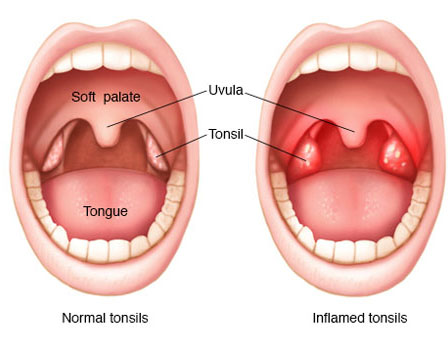
Recurrent tonsillitis is a chronic inflammatory condition of the tonsils characterized by multiple episodes of throat infections over a defined period. This condition can affect both children and adults causing discomfort, difficulty in swallowing, fever and reduced quality of life. It is the inflammation of the palatine tonsils usually caused by viral or bacterial infection. Pathogens colonize the tonsillar crypts triggering the immune response. This leads to vasodilation, leukocyte infiltration and cytokine release causing swelling, redness, pain and sometimes pus formation and leads to systemic effects like fever, malaise and lymph node enlargement occur due to cytokines.
Causes
Recurrent tonsillitis may occur due to a combination of environmental, immunological and lifestyle factors. It include:
- Bacterial Infection: Mainly due to Streptococcus pyogenes but can also be caused by Staphylococcus aureus and Haemophilus influenzae.
- Viral Infections: Adenoviruses, influenza viruses and Epstein-Barr virus can trigger repeated throat inflammation.
- Chronic allergic reactions can cause inflammation and enlargement of the tonsils.
- Immune deficiency
Symptoms
- Sore throat
- Fever and chills
- Red and swollen tonsils
- Bad breath (Halitosis)
- Swollen lymph nodes
- Ear pain
- Voice changes
- Fatigue
Signs
- Enlarged (hypertrophied) tonsils
- Congested and inflamed tonsillar surface
- Presence of whitish or yellowish exudates on the tonsils
- Enlarged and tender cervical lymph nodes
- Redness of the surrounding pharyngeal wall
- Scarring or fibrosis of tonsillar tissue in long-standing cases
- Mouth breathing in children due to enlarged tonsils
Complications
- Peritonsillar abscess
- Tonsillar hypertrophy
- Snoring and obstructive sleep apnea
- Difficulty in swallowing and altered voice
- Recurrent otitis media (ear infections)
- Chronic sinusitis
- Cervical lymphadenitis
- Reactive arthritis
- Repeated antibiotic exposure and resistance
Diagnosis
It involves a combination of clinical examination and investigations.
- Appropriate medical history
- Throat Swab and Culture
- Bloods tests like CBC to rule out infections or allergies
- Imaging tests to rule out abscess.
Treatment
Treatment is broadly divided into non surgical (medical) and surgical approaches.
1. Medical Treatments
It is the first line approach and focuses on treating acute episodes with appropriate antibiotics when a bacterial infection is suspected or confirmed along with antipyretics and analgesics to relieve fever and throat pain.
2. Surgical Treatment
Surgery involves removal of the tonsils (tonsillectomy). It is recommended in patients who do not respond adequately to conservative care or who meet established criteria such as seven or more episodes in one year, five episodes per year for two consecutive years or three episodes per year for three years or having complications.
Ayurvedic Overview
In Ayurveda, Tundikeri is the condition that closely correlates with tonsillitis. In this, the agni (digestive fire) weakens which leads to formation of ama (metabolic toxins) and the aggravation of Kapha Dosha in the body. These two cause heaving, swelling and mitigates and lodges in the oropharyngeal tissues causing srotorodha (obstruction of the microchannels) and further aggravated the Pitta Dosha also. Pitta dosha along with the rakta dhatu (blood tissue) causes inflammation, burning and local tissue damage leading to the given symptoms of tissue. When due to improper dietary and lifestyle habits these dosha and dhatu (tissue) are aggravated very frequently, it leads to recurrent tonsillitis. Thus its management emphasizes Kapha Pitta Shamana (pacification), Ama Pachana (digestion and elimination of metabolic toxins) and local therapies such as Kavala and Gandusha (medicated gargles) along with systemic herbal formulations and dietary regulation aiming to control inflammation, prevent recurrence and preserve the physiological role of the tonsils rather than removing them surgically.
Shaman Chikisa (Pacifying Treatment)
In the management certain herbs are used which possess properties like lekhana (scrapping), shothara (anti inflammatory), ropana (healing), rakta stambhana (blood clotting promotors), vedanasthapaka (analgesic) and Kapha Pitta shamana (Kapha and pitta dosha pacification).
Commonly Used Formulations
- Shringyadi Churna
- Sitopaladi Churna
- Talishadi Churna
- Pushkaramoolasava
- Pippalyasava
- Shwaskuthara Rasa
- Khadiradi Vati, etc.
Dietary Changes In Tonsillitis
- Prioritize soft, warm foods like vegetable soups, khichdi, oatmeal and herbal teas with ginger or Tulsi to soothe the throat and aid digestion without irritating inflamed tonsils.
- Include Vitamin C rich options such as amla, guava or cooked citrus in moderation.
- Avoid dairy, spicy, fried or acidic foods that increase mucus and Kapha Dosha.
- Limit caffeine, alcohol and heavy meat.
Lifestyle Changes To Follow In Recurrent Tonsillitis
- Gargle daily with warm saltwater.
- Turmeric milk to reduce local inflammation and Kapha Dosha
- Practice oil pulling with sesame oil for antimicrobial effects.
- Stay hydrated with warm fluids and avoid cold exposure or overcrowding.
- Drink plenty of warm fluids like herbal teas, warm water and soups to soothe the throat and prevent dryness.
Herbal Remedies For Tonsillitis By Planet Ayurveda
Planet Ayurveda is a renowned herbal and Ayurvedic healthcare company dedicated to promoting natural, safe and effective solutions for a wide range of health conditions. Established with a vision to provide authentic, classical Ayurvedic formulations, Planet Ayurveda combines the wisdom of ancient Ayurveda with modern quality standards. It offers several clinically validated herbal formulations to manage recurrent tonsillitis in a non surgical way. The Tonsillitis Care Pack is very effective in the management of tonsillitis. It includes:
Product List
- Khadiradi Vati
- Septrin Tablets
- Fev-lo Capsules
- Fluendza Capsules
- Tulsi Capsules
- Vara Churna
Tonsillitis Care Pack


Product Description
1. Septrin Tablets
It is a tablet formulation of Planet Ayurveda which consists of Haldi (Curcuma longa), Guggul (Commiphora mukul), sunthi (Zingiber officinale), maricha (Piper nigrum) and others. It helps in pacifying Vata and Kapha dosha which are responsible for throat pain, swelling, and mucus accumulation. It contains active alkaloids like eugenol, curcumin which helps enhance the body’s natural defense mechanisms, reduce inflammation, and provide antimicrobial support.
Dosage: 1 - 2 tablets twice daily with warm water after meals.
2. Khadiradi Vati
It is a classical ayurvedic tablet formulation prepared by Planet Ayurveda which consists of khadir (Acacia catechu), Javitri (Myristica fragrans) and others. It helps to reduce inflammation, clear mucus, and pacify doshas. Research studies show its antimicrobial and anti-inflammatory effects, helping to limit microbial growth and relieve local tissue inflammation, thus providing symptomatic relief and supporting faster healing of the tonsils. It also works as a lozenge thus helps in clearing the kapha from the throat.
Dosage: 1 - 2 tablets twice daily with lukewarm water.
3. Fev-Lo Capsules
It is a capsule formulation of Planet Ayurveda which consists of Sudarshan (Crinum latifolium), Kalmegh (Andrographis paniculata), Godanti Bhasma (Purified gypsum) and many others. It helps to balance Pitta dosha, reduce systemic and local inflammation and support the immune response. It exhibits antipyretic and anti-inflammatory activity helping to reduce fever, malaise and body aches commonly seen in tonsillitis.
Dosage: 1 - 2 capsules twice daily with plain water after meals.
4. Fluendza Capsules
It is a capsule formulation of Planet Ayurveda which consists of Tulsi (Ocimum sanctum), Giloy (Tinospora cordifolia), Turmeric (Curcuma longa), Amla (Emblica officinalis) and black pepper (Piper nigrum). It relieves flu like tonsillitis symptoms by clearing respiratory mucus and congestion. Its mucolytic and immunomodulatory actions reduce tonsillar inflammation, ease breathing and prevent recurrence by strengthening resistance to respiratory pathogens.
Dosage: 1 - 2 capsules twice daily with plain water after meals.
5. Tulsi Capsules
It is a capsule formulation of Planet Ayurveda which consists of standardised extract of tulsi (Ocimum sanctum). It enhances immunity against tonsillitis causing viruses and bacteria. Its antiviral, antibacterial, antioxidant and immunomodulatory properties, supporting the body’s natural defenses, shortening recovery time and preventing recurrent throat infections.
Dosage: 1 - 2 capsules twice daily with plain water after meals.
6. Vara Churna
It is a powder formulation of Planet Ayurveda which consists of triphala that is Haritaki (Terminalia chebula), Bibhitaki (Terminalia bellerica) and Amalaki (Emblica officinalis). It helps in managing tonsillitis by improving digestion and eliminating Ama (metabolic toxins) which fuels chronic inflammation. As a gentle laxative and detoxifier it supports bowel clearance to indirectly reduce throat toxicity, balancing doshas and preventing toxin buildup that exacerbates swelling.
Dosage: ½ tsp of this powder mixed with water in evening
Conclusion
Recurrent tonsillitis is a common but manageable condition. While conventional medicine often recommends tonsillectomy for frequent infections, Ayurvedic therapies can provide long term relief and prevent recurrence. Managing recurrent tonsillitis requires addressing not only acute infections but also the underlying factors such as weakened immunity, chronic inflammation, allergies, poor digestion and lifestyle imbalances and Ayurveda does that by focusing on root cause correction through detoxification, dosha balancing, immune modulation, and tissue nourishment. When combined with proper diet, adequate hydration, stress management and healthy lifestyle practices these remedies provide sustainable relief without the risks associated with surgery or long term antibiotic dependence.
No comments:
Post a Comment